The installers have packed up, the room is empty and the floor looks the way it did in the sample. The next few weeks are when it is easiest to put the first scratch in it, and when the small questions come up: can I mop yet, why is the carpet shedding, is that gap supposed to be there.
This is what we tell customers when we finish a job, by floor type.
The first day, whatever the floor
- Lift furniture, do not drag it. Most first scratches on a new hard floor happen while the furniture is going back in.
- Put felt pads on every leg before it goes down: chairs, tables, sofas, beds, the piano bench. Check them every few months, because they wear and pick up grit.
- Walk appliances in on a board or appliance glides. A refrigerator walked across vinyl plank on its own feet can gouge it. Put a piece of hardboard or plywood down and slide it along that.
- Swap hard plastic casters on desk chairs for soft ones made for hard floors, or use a chair mat. A rolling office chair on carpet needs a mat too, or it will wear a patch.
- Keep the spare boxes. Store a box or two of leftover plank or tile somewhere dry and flat. If a plank is ever damaged, a match from the same production run is the one that disappears.
- File the paperwork. Keep your invoice and the product name, color and lot number from the box label. Reading a flooring warranty explains why.
Luxury vinyl plank and laminate
Floating floors can be walked on as soon as the installers leave. There is no adhesive to cure.
Glue-down vinyl plank needs the adhesive to set before it takes heavy weight. Light foot traffic is usually fine the same day, but hold off on heavy furniture, appliances and rolling loads for a day or two. We will tell you the time for the adhesive we used. Glue-down or floating vinyl plank covers the difference.
Then:
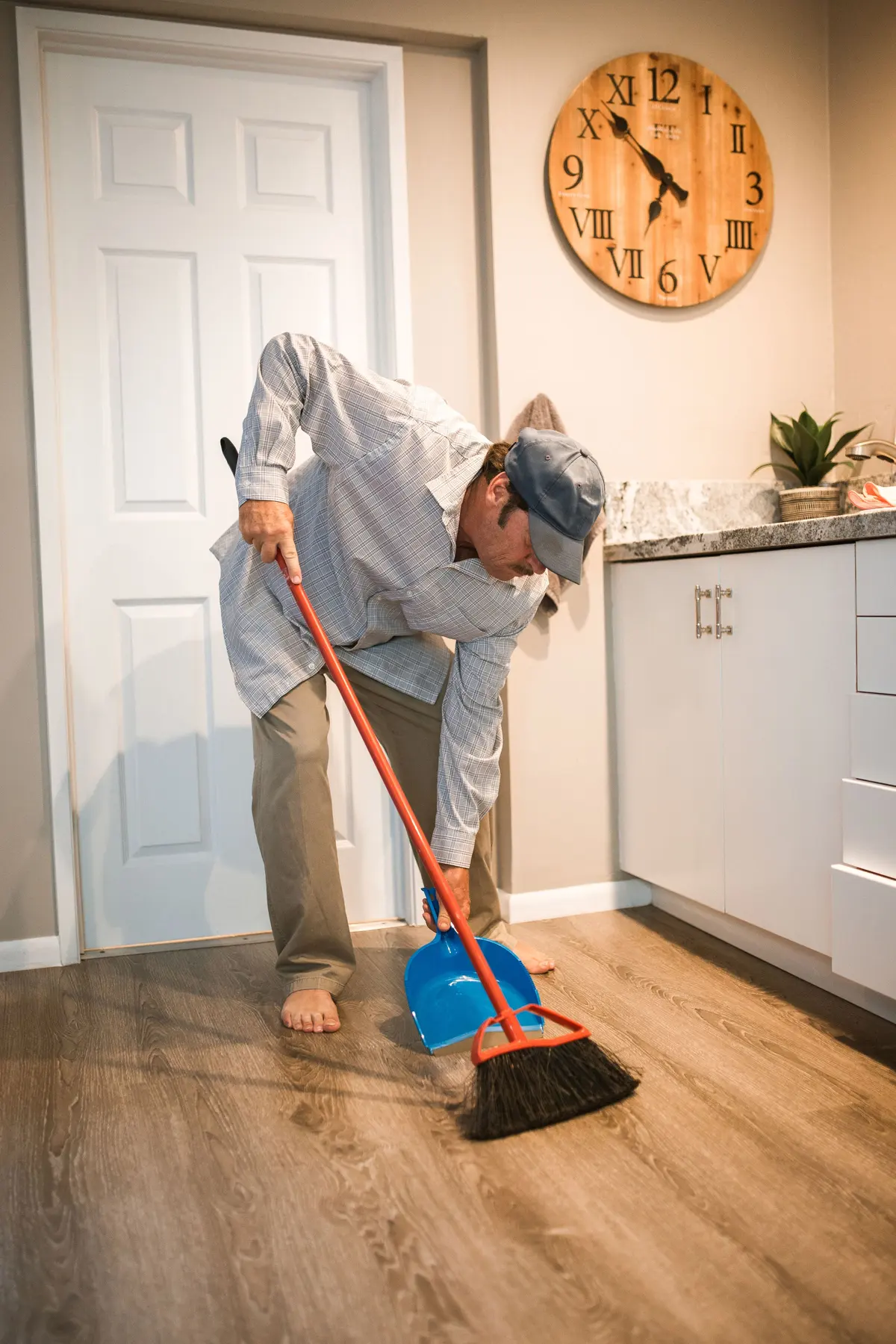
- Sweep or dry dust mop first. Grit is what dulls and scratches a floor, not water.
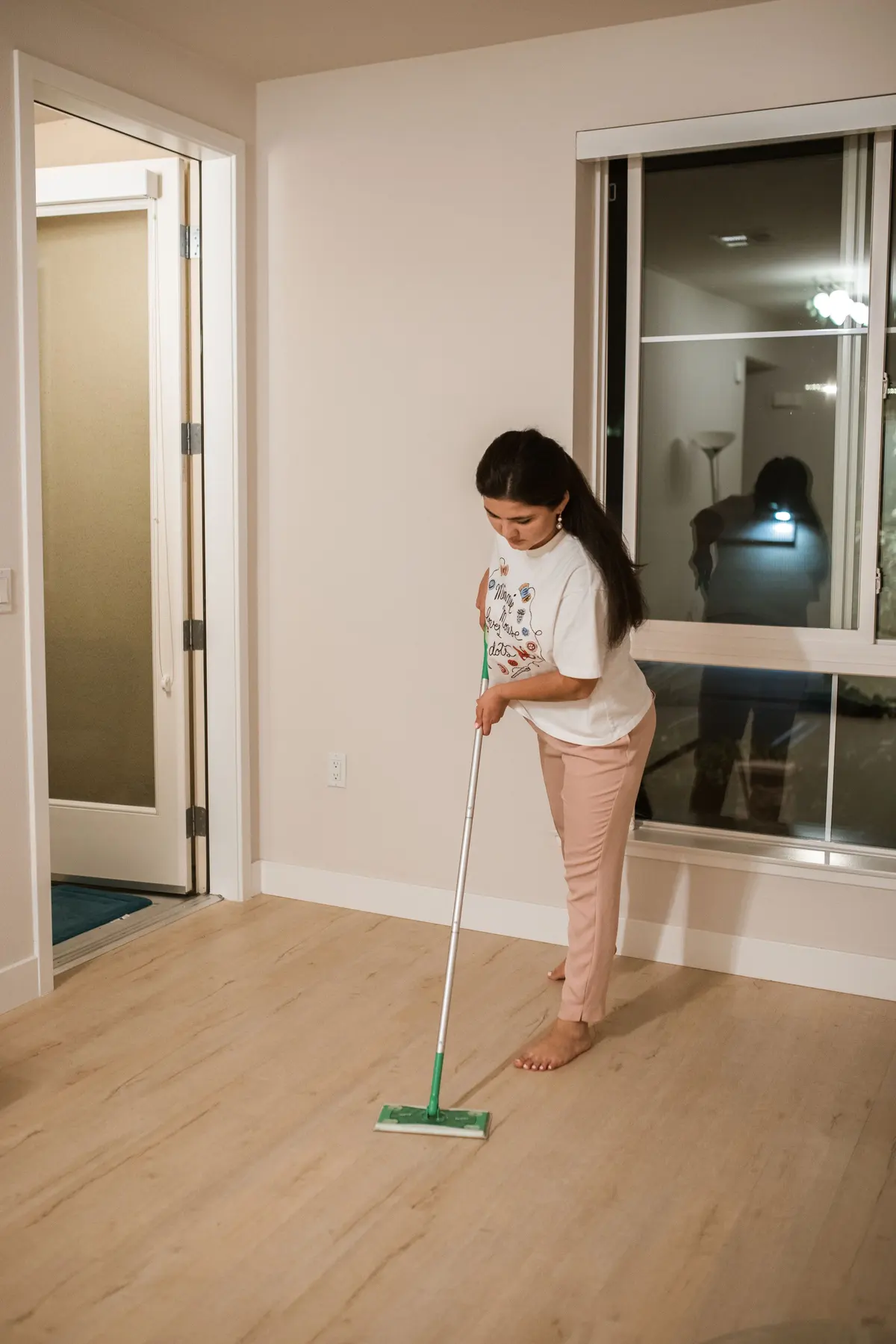
- Damp mop, do not flood it. A well-wrung mop with the cleaner the manufacturer recommends. Even a waterproof plank floor should not have water standing on it at the walls.
- No steam mops, wax, oil soap or polish unless your manufacturer's care guide says otherwise. Many vinyl plank manufacturers advise against steam mops, and laminate warranties commonly exclude them.
- Watch the rugs. Some rubber and latex rug backings react with vinyl and leave a permanent stain. Use a rug pad your flooring manufacturer approves.
- Put mats at the doors, inside and out, before the wet season tracks the yard in.
Carpet
Shedding is normal. New cut-pile carpet sheds loose fibers left over from manufacturing, sometimes for weeks. Vacuum regularly and it tapers off. It is not the carpet wearing out.
A tuft standing up above the rest is a sprout. Snip it level with the pile using scissors. Never pull it, because that can pull a row out with it.
The new carpet smell fades within a few days with windows open and fans running.
Vacuum the way the manufacturer says. Some wool and loop-pile carpets call for suction only, or a vacuum whose brush roll can be turned off, because a beater bar can fuzz them.
Pile direction and shading. Carpet can look lighter or darker depending on which way the pile is lying, and footprints and vacuum lines show clearly in the first weeks. That is the pile, not a fault, and it settles.
Seams. A seam you can just see from one angle in low light from a window is normal on many carpets. A seam that is opening, fraying or peaked is a workmanship issue and worth a call.
Tile
Tile is the floor that needs the most patience at the start, because the grout and the setting mortar underneath both need time to cure.
- Keep traffic light for the first day or so, and keep heavy furniture off until we say it can go back.
- Do not wet mop for the first few days. Dry dust mop instead.
- Sealing. Many cement-based grouts benefit from a sealer once they have cured, while epoxy and some newer grouts do not need one. We will tell you which grout you have and when, or whether, to seal it.
- Cleaning. Use a pH-neutral cleaner. Acidic and harsh cleaners eat into cement grout and some stone.
- A light haze on the tile surface in the first days is usually grout residue. Tell us rather than scrubbing it with something abrasive.
What a tile shower actually involves covers the shower side of tile.
Doors, transitions and trim
New flooring is rarely exactly the same height as what came out. If a door now rubs, it usually needs a small trim off the bottom, and it is better done than forced. If a transition strip between rooms feels loose or a piece of trim has a gap, tell us; those are part of the job. What happens to your baseboards explains how trim is handled.
The first heating season
Hard floors move a little with the seasons. When the heat comes on in the fall and the air indoors dries out, a floating floor can open very small gaps at the plank ends, and they usually close again in spring. That is the material reacting to the house. Looking after your floors through a wet Oregon winter covers the seasonal side.
What is worth a call
Call your installer rather than waiting and seeing if you notice:
- Planks that are peaking or lifting at the joints, or gaps that keep growing
- A spot that sounds hollow, clicks or flexes underfoot
- Carpet that ripples, or a seam that is opening
- A cracked tile, cracking grout, or a tile edge sitting noticeably higher than its neighbor
- Any sign of water under the floor
Do not pull anything up or try a repair yourself first, because it can complicate a warranty claim. Take a dated photo and call.
We are a phone call away
Every Norman's install carries a ten year labor warranty, plus the manufacturer's warranty on your materials, and we have been fitting floors from Newberg since 1978. If something about your new floor does not look right, call (503) 538-8242 or stop by the showroom at 900 Industrial Parkway, Monday to Friday, 9am to 5pm. Planning a floor and not there yet? Book a free estimate online.
Related services: luxury vinyl plank flooring, laminate, carpet and tile.