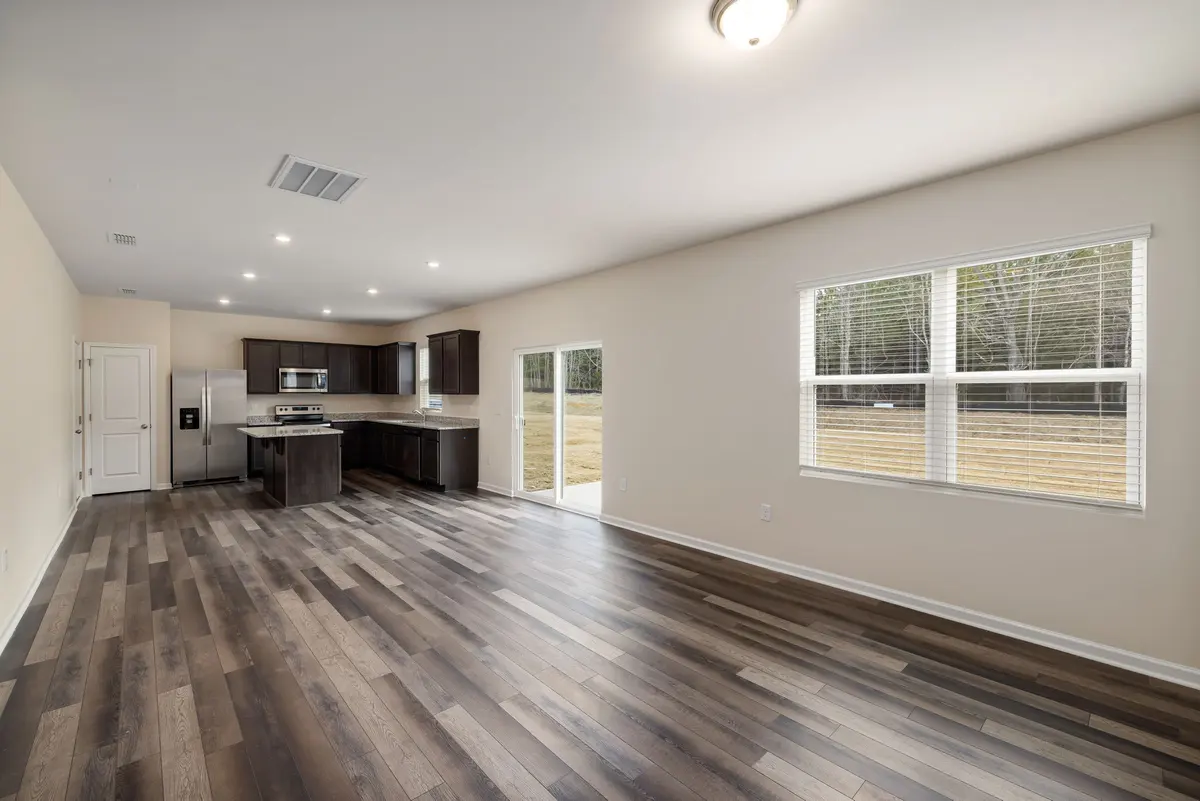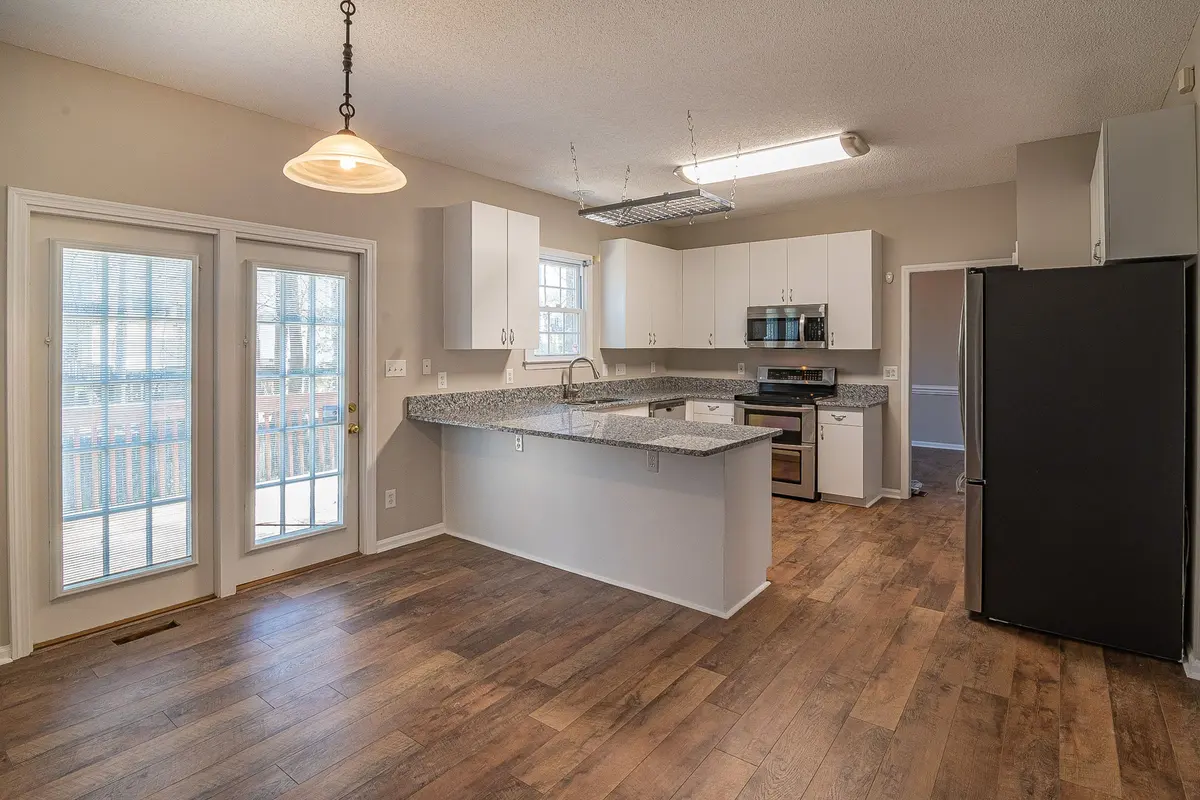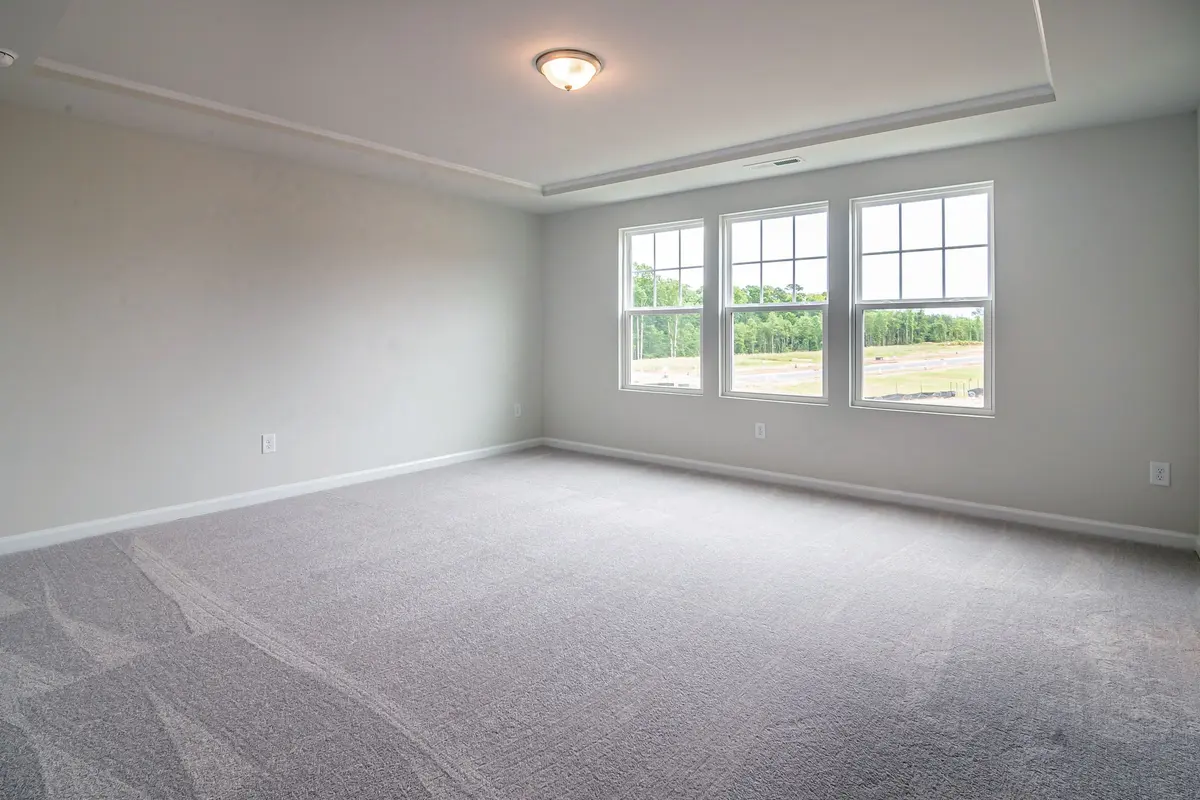
Most luxury vinyl plank sold for houses today is a floating floor: planks that click together and rest on the subfloor without being fastened to it. There is another way to lay vinyl, glued down to the subfloor, and it is still the standard in a lot of commercial buildings and the better choice in some rooms at home.
Customers do not usually ask which method they are getting, and they should, because it changes how the floor feels, how it handles sun and heavy furniture, what preparation the subfloor needs, and what the job costs. This is the difference, in plain terms.
The two methods
Floating. Click-lock planks, usually with a rigid core, locked together edge to edge. The floor is one big connected sheet that sits on the subfloor, often with an underlayment attached to the plank or laid beneath it. Nothing holds it down except its own weight and the trim around the edges. Because it is not fastened, it needs a gap at every wall to expand and contract, hidden under the baseboard or quarter round.
Glue-down. Thinner, flexible planks, often called dry-back, laid into adhesive spread on the subfloor. Each plank is bonded to the floor beneath it. There is no click joint and no underlayment, and the floor does not move as a sheet.
There is also loose-lay vinyl, heavy planks that grip the floor by friction, but it is less common in houses and works best where it is held in by walls on all sides.
Where a floating floor is the right answer
For most rooms in most houses, floating is the right choice, which is why it has become the default.
- It is more forgiving of the subfloor. A rigid core plank bridges small dips and seams that a thin glue-down plank would show. The subfloor still has to be flat within the manufacturer's tolerance, often around 3/16 of an inch over ten feet, but the preparation is usually lighter.
- It goes down quickly. No adhesive, no open time, no cure. Rooms can usually be walked on as soon as the planks are down.
- It feels more solid underfoot. A thicker rigid core with an attached pad has more substance than a thin glue-down plank.
- It suits a house over a crawlspace. A lot of houses in the valley sit on a wood subfloor over a crawlspace, which suits a floating floor well.
Where glue-down earns its place
Glue-down is the better answer in a handful of situations, and they are worth knowing.
- Rooms with a lot of sun. Vinyl expands with heat. A floating floor in front of a big south- or west-facing glass door can expand enough on a hot afternoon to buckle or open at the joints, which is why many manufacturers set rules for direct sun on floating floors. Glued down, the plank is held in place and cannot move as a sheet.
- Long, open runs. Floating floors have a maximum continuous length before they need an expansion break, usually a T-molding across a doorway or opening. The limit varies by product. Glue-down can run through a large open area or a long hallway without breaks.
- Heavy, fixed things. A floating floor has to be free to move, so kitchen islands, cabinets and built-ins should not be installed on top of it. Pinning it down in the middle stops it moving and can cause it to buckle elsewhere. A very heavy piano or safe can cause the same problem. Glue-down does not care.
- Rolling loads. Office chairs, wheelchairs, carts and hospital beds work a click joint over time. A bonded floor stands up better, which is the main reason glue-down is so common in commercial flooring.
- Stairs. Vinyl on stairs is glued and fastened rather than floated. Stair flooring: carpet or hard surface covers how stairs are done.
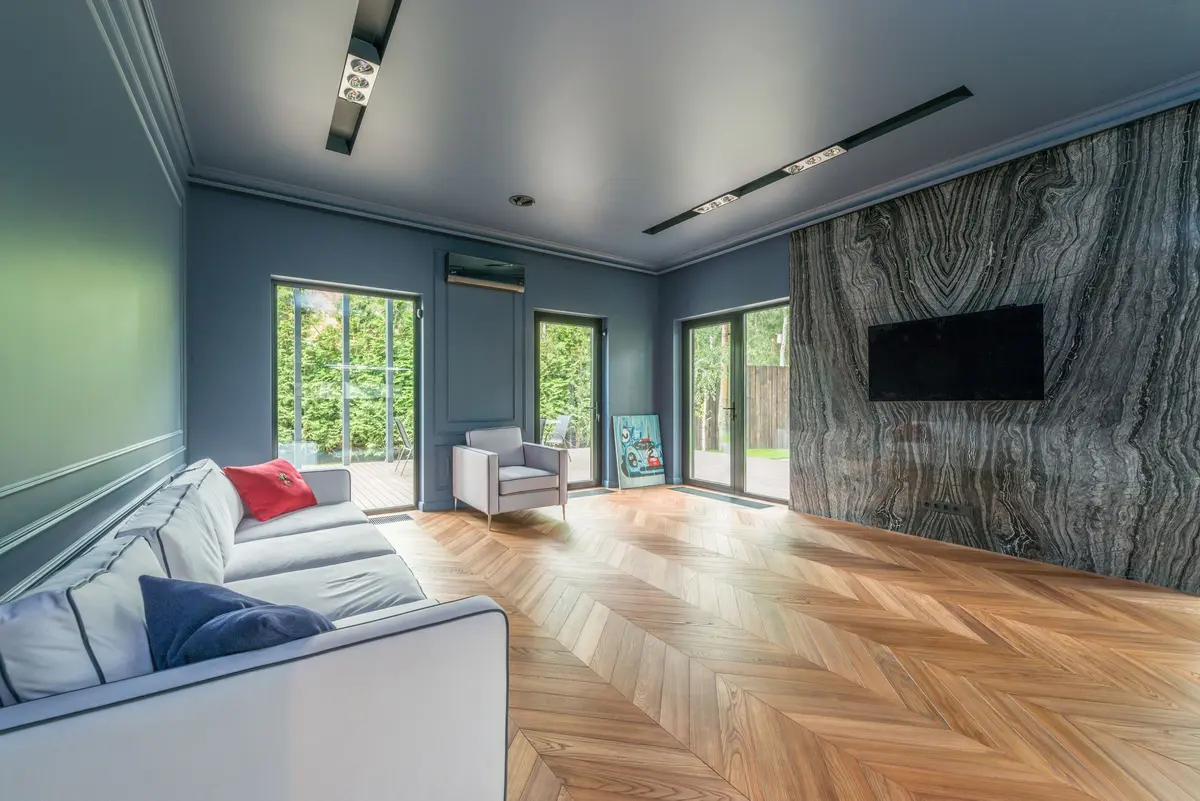
- Patterns. A herringbone or chevron in vinyl is usually laid as glue-down, because the pieces are small and the pattern has to hold its lines.
What glue-down asks of the subfloor
The price of glue-down is preparation.
A thin plank bonded to the floor shows everything beneath it. A seam in the plywood, a screw head, a ridge of old adhesive or a trowel line in a patched area will all telegraph through, sometimes not until the light comes across the floor at a low angle in the evening. A glue-down floor needs a subfloor that is flat, smooth, clean and sound, which often means skim-coating or a self-leveling compound before the floor goes down. That preparation is where most of the extra cost in a glue-down floor comes from.
On concrete, both methods need the slab checked for moisture, but glue-down especially, because adhesives have moisture limits and too much moisture coming up through a slab can make them fail.
Repairs
One advantage of glue-down that people rarely hear about: individual planks are easier to replace. A damaged glue-down plank can be warmed, lifted and replaced on its own. A damaged plank in a click floor in the middle of a room usually means either unclicking the floor from the nearest wall or cutting the plank out and dropping in a replacement with its locking edge trimmed off.
Glue-down also handles a leak differently. Water cannot run under a well-bonded floor the way it runs through the joints of a floating one. But if water does get under glue-down, it can weaken the adhesive and the planks have to come up. What to do when a leak gets under your floor covers that situation.
Noise and feel
A floating floor can sound slightly hollow underfoot, especially over a subfloor that is not perfectly flat or without a good underlayment. Glue-down sounds and feels more like the subfloor itself, quieter but harder. In a condo or an upstairs room, ask about acoustic underlayment either way.
Which we would recommend
For most bedrooms, living rooms, kitchens and bathrooms in a house over a crawlspace, a good rigid core floating plank. For a sunroom, a room with a wall of glass, a long open space, a busy office, or anywhere heavy fixed furniture has to sit on the floor, glue-down is worth the extra preparation. Plenty of houses end up with both. Luxury vinyl plank installation cost in Oregon covers what moves the price, and our luxury vinyl plank page shows the range.
See it in your own rooms
At the estimate we look at the subfloor, the light, and what is going to sit on the floor, and we will tell you which method suits each room and why. Norman's has been installing floors from Newberg since 1978, with a showroom at 900 Industrial Parkway, open Monday to Friday, 9am to 5pm, and a ten year labor warranty on every install. Call (503) 538-8242, or book a free estimate online.
Related services: luxury vinyl plank flooring, commercial flooring and stairs and trim.