Installation day goes well or badly for fairly predictable reasons, and most of them are decided in the week beforehand.
None of this is complicated. It is just easier to read it now than to be told it on the morning.
Two weeks out: let the material acclimate
Most floor coverings need to sit in the room they are going into before they are installed, so they reach the temperature and humidity they will live at. The period varies by product and the manufacturer specifies it.
This matters more here than in a dry climate. A plank that goes down at a different moisture content than the room will move afterwards, and with a floating floor that shows up as gaps in the dry season or buckling in the wet one.
Practically: we will tell you when the material is arriving and where it needs to sit. Boxes stay flat, in the room, out of a garage and away from an exterior wall.
The week before: empty the rooms
Everything portable needs to be out of the rooms we are working in. Small furniture, lamps, rugs, plants, anything on the floor of a closet, and anything on shelves that could be knocked.
A few specific ones people forget:
- Wall hangings and anything on a shelf against a shared wall. Floor removal is percussive and things vibrate off walls.
- Curtains and blinds that come down to the floor. They get in the way of trim work.
- The contents of closets, if the floor is going into the closet.
- Anything fragile anywhere near the work. Dust travels further than you expect.
Talk to us about large or heavy furniture rather than moving it yourself. We would rather handle a piano or a full china cabinet than have somebody hurt their back. Items that are exceptionally heavy, fragile or valuable are worth flagging when we measure so it is planned rather than improvised.
Appliances, and who disconnects what
Anything plumbed or gassed needs disconnecting properly by whoever is qualified to do it — the washing machine, the dishwasher, a gas range, the fridge line if it has an ice maker. Toilets sometimes need pulling for a bathroom floor.
This is worth sorting out at the estimate rather than on the day. A dishwasher that is still connected on the morning stops work in that room.
Doors
The new floor is rarely the same height as the old one, so interior doors may need trimming to clear it. Bifold and closet doors are the usual candidates.
We will tell you at the measure whether we expect this to be an issue.
Expect it to be noisy, dusty and disruptive
Removing an old floor is loud. Taking up glued vinyl or tile set in thinset is very loud and produces fine dust, and while it gets contained and cleaned up, it is unpleasant to be in the house for.
If you work from home, plan to work somewhere else on the removal day. If you have a baby who naps, or a dog that is anxious about noise, plan for them to be elsewhere. It is the single most common thing people tell us they would have done differently.
Pets and children
There are open doors, tools, adhesives and offcuts with sharp edges. Pets need to be secured in a room we are not working in, or out of the house.
We would much rather know in advance that there is a cat who will make a break for the front door than find out at the wrong moment.
Parking and access
We are carrying long, heavy, awkward material and taking a lot of old flooring out. The closer we can get to the door, the better the day goes.
Where parking is tight, a shared drive, or there is a gate that needs unlocking, let us know beforehand.
Heating and power
The house needs to be at a normal living temperature before, during and after installation — adhesives and floating floors both assume it. And we need working power outlets in or near the rooms.
If the house is empty or between occupants, this is worth checking rather than assuming.
What happens on the day
We arrive, protect the route in, and confirm the layout with you before anything is cut — plank direction, where the transitions land, and which way the pattern runs. It is much easier to agree that at the start than to discuss it afterwards.
The old floor comes up, the subfloor is checked and prepared, and the new floor goes in. Removal and disposal is part of the job, so the old material leaves with us.
When it is done we will walk the job with you. That is the moment to raise anything you are not sure about, while we are still there.
After it is down
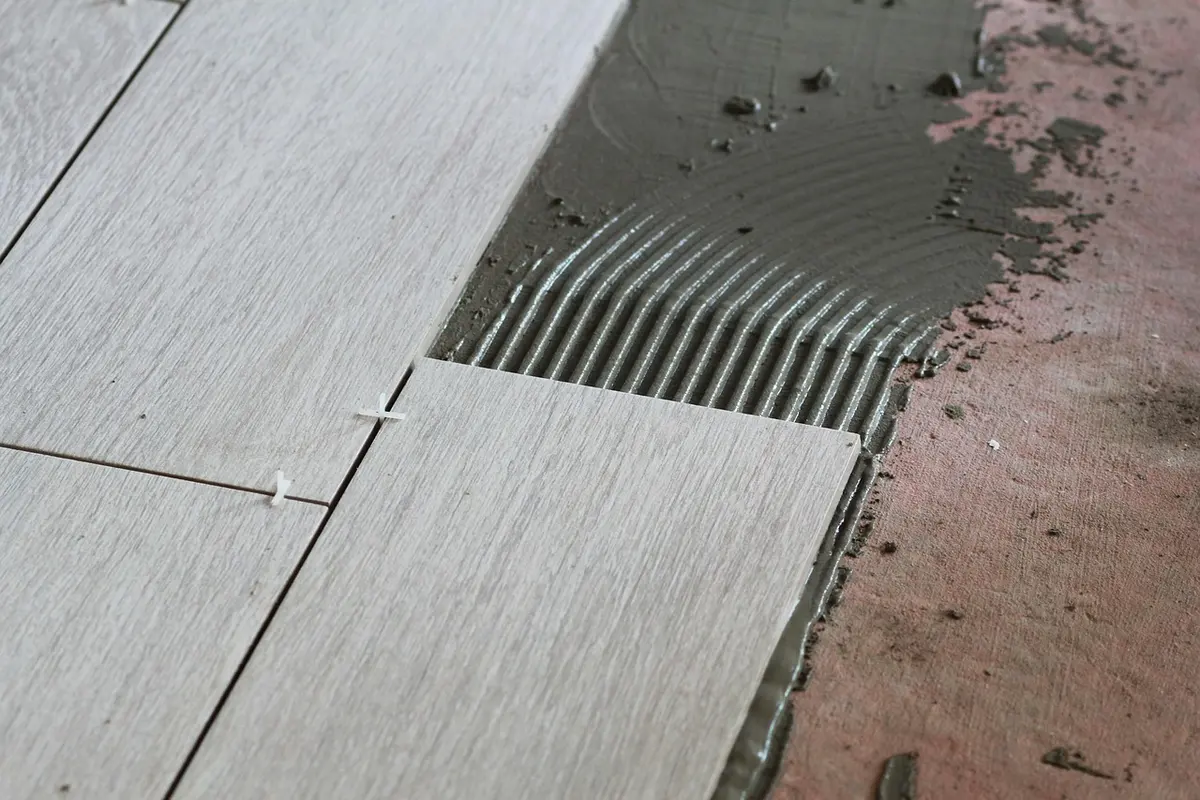
With a glued floor or a tiled floor, stay off it for the period we tell you — the adhesive or thinset needs to cure and traffic before then affects the bond. A floating floor is normally walkable immediately.
When furniture comes back, lift it rather than dragging it, and put felt pads on the feet of anything that will be moved regularly — chairs at a table are what put the scratches in a floor.
With carpet, expect some shedding of loose fiber for the first few weeks. It is normal and it stops.
Anything else
The people who quote your job are the people who install it, so anything you agreed at the estimate is known on the day. If something changes between the two, tell us — it is much easier to plan for than to react to.
Norman's Floor Covering has been installing floors in Newberg since 1978. We are licensed with the Oregon Construction Contractors Board under CCB 103259 and our installation work carries a ten year labor warranty. The showroom is at 900 Industrial Parkway, Monday to Friday.
Related services: floor removal and demolition, carpet installation and luxury vinyl plank flooring.