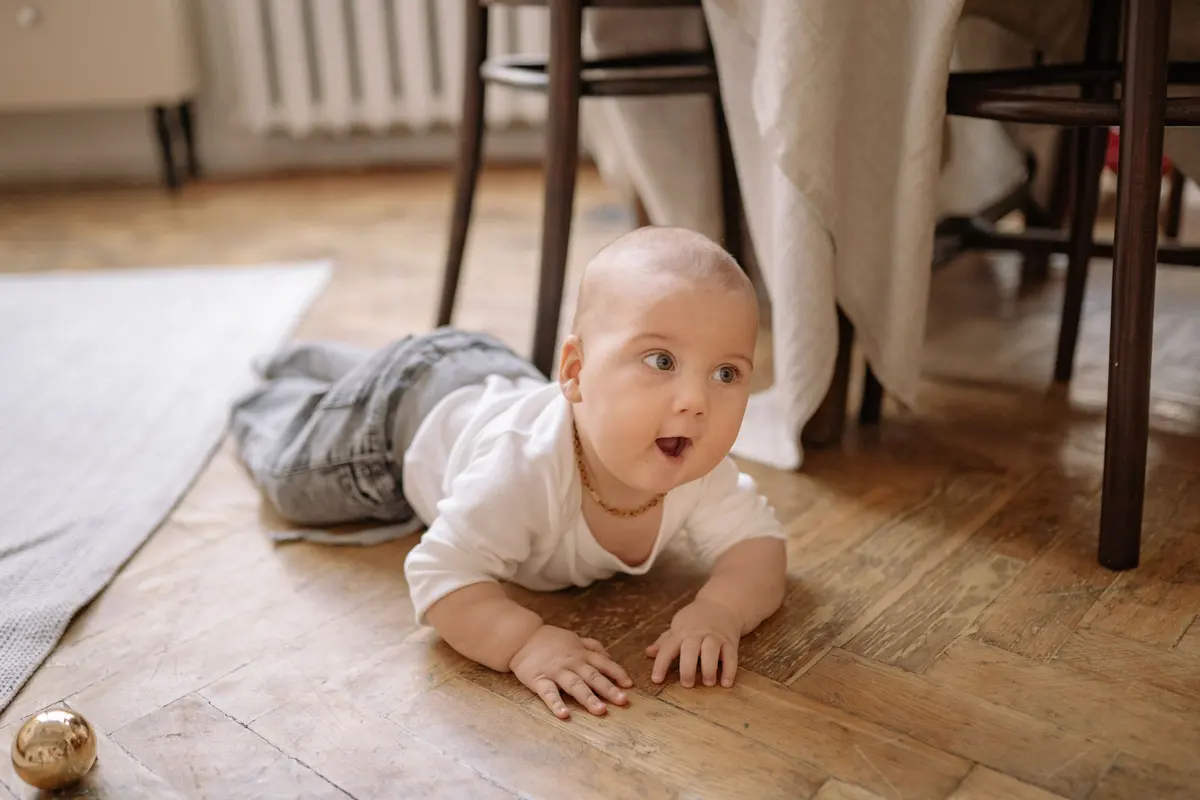
Small children are hard on a floor, and they also spend more time on it than anyone else in the house. A floor in a family home has to survive spilled milk, dropped toys and a ride-on truck, and it has to be somewhere you are happy to put a baby down.
Those two jobs pull in different directions. Here is how we think about it, room by room, after a lot of years fitting floors in family houses around Newberg and the Westside.
What a floor has to do in a house with small kids
- Be comfortable to sit, crawl and fall on. Babies spend months at floor level, and toddlers fall over many times a day.
- Clean up easily. Milk, juice, food, paint, and the things that come with potty training.
- Survive impact and scraping. Wooden blocks, toy cars, a dragged chair, a kitchen stool pushed back from the counter a thousand times.
- Be quiet enough. Hard floors in an open house carry the noise of a toddler running, and a nap upstairs is worth protecting.
- Not add much to the air. A new floor and its adhesives can give off a smell for the first days, and with an infant in the house it is fair to want that kept low.
No single product does all of that well, which is why most family houses end up with two: a hard surface where the mess happens, and carpet where the sitting and playing happens.
Luxury vinyl plank: the workhorse
For kitchens, dining areas, entries, hallways and family rooms, rigid-core luxury vinyl plank is usually the right answer in a house with small children.
It is waterproof as a plank, so a spilled cup is a wipe rather than a worry. It is warmer and softer underfoot than tile. A plank with an attached pad or a good underlayment is noticeably quieter than laminate, which can have a hollow click under running feet.
The detail that matters is the wear layer, the clear top layer that takes the abuse. Anything under about 12 mil is a light-duty floor. With children, toys and a dining table that gets pushed around, 20 mil is worth the step up, and it is a smaller step in price than most people expect. Luxury vinyl plank installation cost covers what moves the number.
A matte finish and a mid-tone with some grain in it will hide scuffs and crumbs far better than a glossy floor or a very dark or very light one. Light or dark floors goes into why.
Carpet: still the best floor for playing on
For bedrooms, a playroom and the room where everyone sits on the floor, carpet is still hard to beat. It cushions a fall, it is warm to sit on, and it soaks up noise.
Choose it for the job:
- A good pad matters as much as the carpet. It is the cushion, and it is what keeps the carpet from flattening in front of the toy box. Choosing carpet that lasts covers pad and fiber.
- Stain resistance is built in, or it is not. Solution-dyed fibers hold their color through stain cleaning, and polyester shrugs off many water-based spills. Nylon is the more resilient fiber where there is a lot of traffic. Ask which you are looking at.
- A cut pile is kinder to small fingers and toys than a big loop. Loop carpets can snag on toys and on the edges of a dropped bead or Lego.
- Mid-tone and a little pattern forgive more than a solid light color.
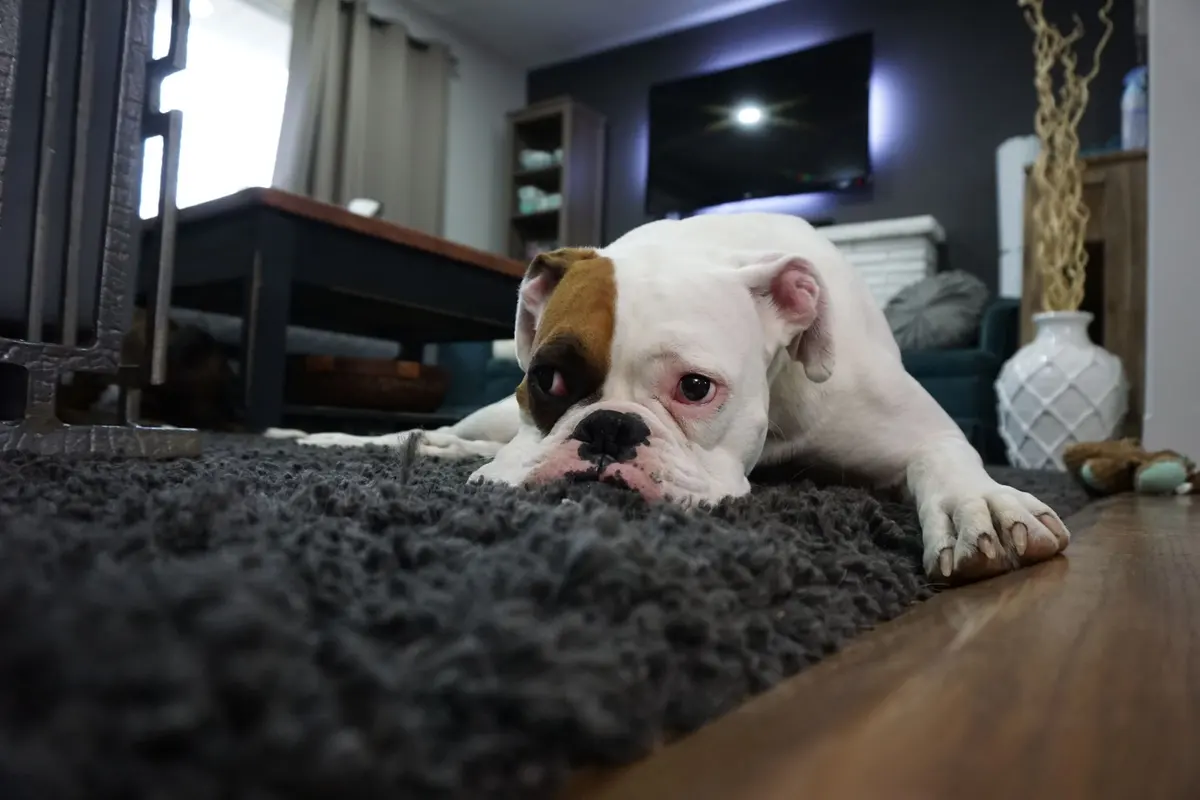
Carpet does not like repeated soaking. If a playroom also gets juice, paint and the occasional accident, a hard floor with a big washable rug on it can be the better plan.
Laminate and tile, where they fit
Laminate is tough on the surface and resists scratches very well, and a water-resistant laminate handles everyday spills. It is harder and louder underfoot than vinyl plank. Laminate vs luxury vinyl plank covers which suits which room.
Tile is close to indestructible and is the right answer for a bathroom floor that sees bath-time splashing every night. It is also hard and cold, and a dropped cup will break on it. In a bathroom or a mudroom it earns its place. In a family room where a baby will crawl, it is a tough floor to sit on. Tile floors beyond the shower covers where tile works best.
Room by room
- Kitchen and dining: luxury vinyl plank, 20 mil wear layer, matte finish. The floor under a high chair takes more food than any other in the house.
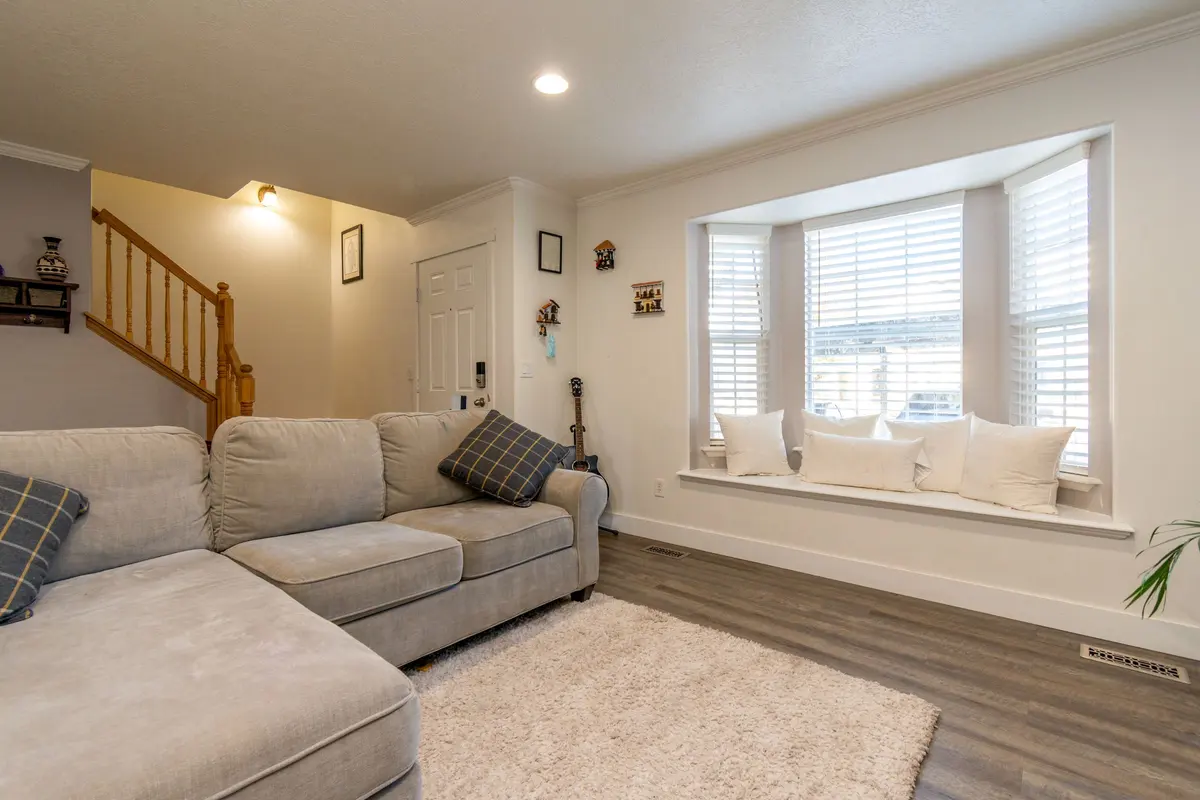
- Family room: vinyl plank with a large rug for play, or carpet if the room is mostly for sitting and playing on the floor.
- Bedrooms and playroom: carpet with a good pad.
- Bathrooms: tile, or vinyl plank if you want something warmer underfoot.
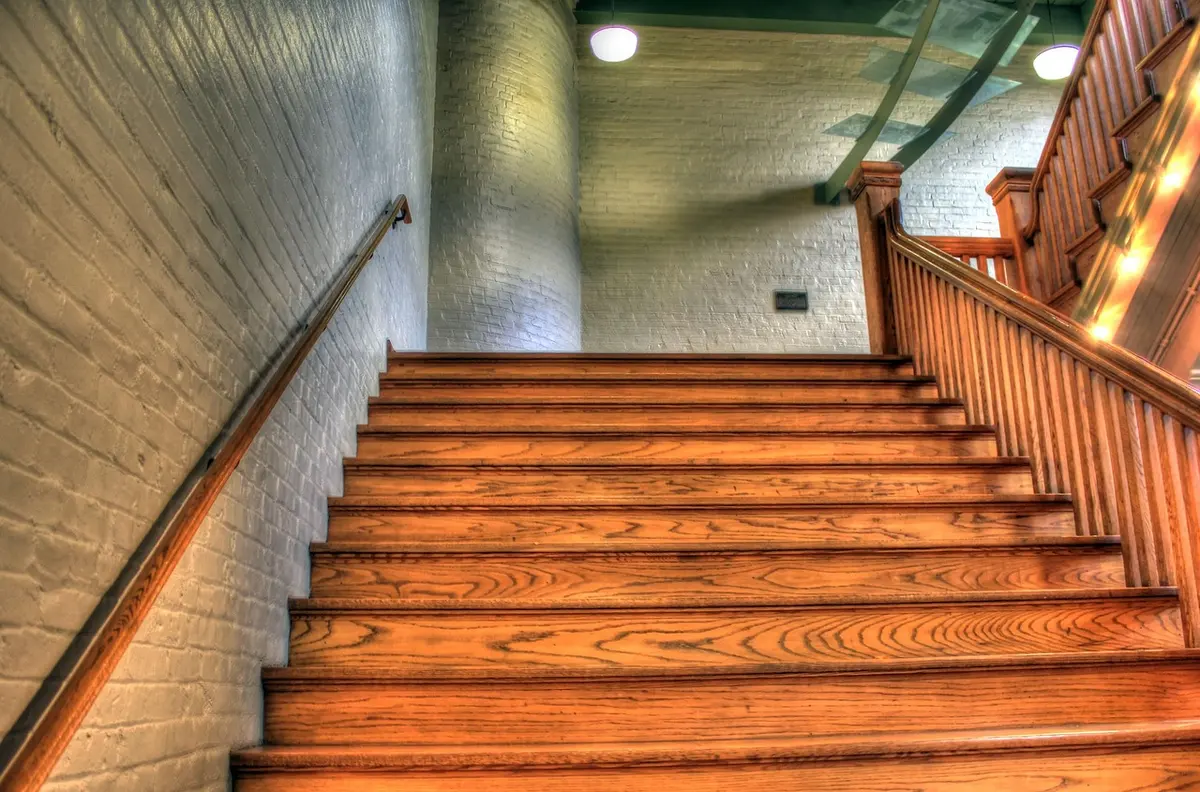
- Stairs: carpet while the children are small. It grips socks and softens a slip. Stair flooring explains the trade-off.
- Entry and mudroom: a hard surface with a mat that can take wet boots.
Rugs on hard floors
A rug is the easiest way to get a soft play space on a hard floor, and it can be replaced when it has seen enough.
Watch what is on the back of it. Some rubber and latex backings react with vinyl and leave a permanent yellow stain under the rug, and a non-slip rug bought for a baby's room is exactly the kind that has one. Use a rug pad your flooring manufacturer approves for vinyl, and the rug stays put without marking the floor.
What the floor gives off when it is new
A new floor and its adhesives can have a smell for the first few days. If you have an infant, or someone in the house is sensitive to it, two certifications are worth asking about:
- CRI Green Label Plus on carpet, carpet pad and adhesives, a low-emission program run by the Carpet and Rug Institute.
- FloorScore on vinyl plank, laminate and other hard surfaces, an independent indoor air quality certification.
Beyond that, the simple steps work: open windows and run fans for the first days after installation, and if you can, have the work done before a new baby comes home rather than after. A floating floor needs no adhesive at all, which is one more reason it suits a lived-in house.
Planning for the next ten years
Children grow out of the crawling stage quickly and into the ride-on, bike-in-the-hall and teenage stage. A floor that suits a baby but not an eight-year-old is a short-lived choice. Build for the hard years: a strong wear layer where the traffic is, carpet you can replace on its own in the bedrooms, and a layout that does not leave a lot of different floors meeting at awkward thresholds. Matching flooring through the house covers how to keep it looking like one house.
If there is also a dog in the picture, pet-friendly flooring covers what changes.
See it in your own room
Tell us at the estimate who lives in the house, how old the children are, and where the mess actually happens. We bring the samples to your home so you can see them in your own light, put a sample down where the high chair goes, and press on the carpet with the pad underneath it. Norman's has been flooring family houses from Newberg since 1978, and every install carries a ten year labor warranty on top of the manufacturer's warranty on your materials.
Visit the showroom at 900 Industrial Parkway, Monday to Friday, 9am to 5pm, call (503) 538-8242, or book a free estimate online.
Related services: luxury vinyl plank flooring, carpet, laminate and tile.