Almost every estimate we go out on starts with a version of the same question. The homeowner has narrowed it down to carpet or luxury vinyl plank, they have been told conflicting things by three different people, and they want someone to just tell them which one is right.
The honest answer is that it depends on the room, and that most houses end up with both. What follows is how we actually make the call.
Start with what the room does, not what it looks like
A floor is a working surface before it is a decorative one. Before color comes into it, we want to know three things about the room: how much water it sees, how much traffic crosses it, and whether anyone is going to be sitting on the floor in it.
Water is the one that settles most arguments. Bathrooms, laundry rooms, mud rooms and entries all see standing water at some point, and carpet in those rooms is a maintenance problem you will be living with for years. Luxury vinyl plank is waterproof through its whole thickness, which is the reason it has taken over those rooms almost completely.
Traffic decides how quickly a floor stops looking new. Hallways, stairs and the path from the back door to the kitchen take several times the wear of a spare bedroom. Carpet in those runs will show a track long before the rest of the room looks tired.
The third question sounds soft and is not. If you have small children, or you are the kind of household that sits on the floor to read or play or fold laundry, that is a real argument for carpet in the rooms where it happens. No hard surface is comfortable to sit on, and nobody is happier with their floor because it scored better on a wear test.
Where carpet still wins
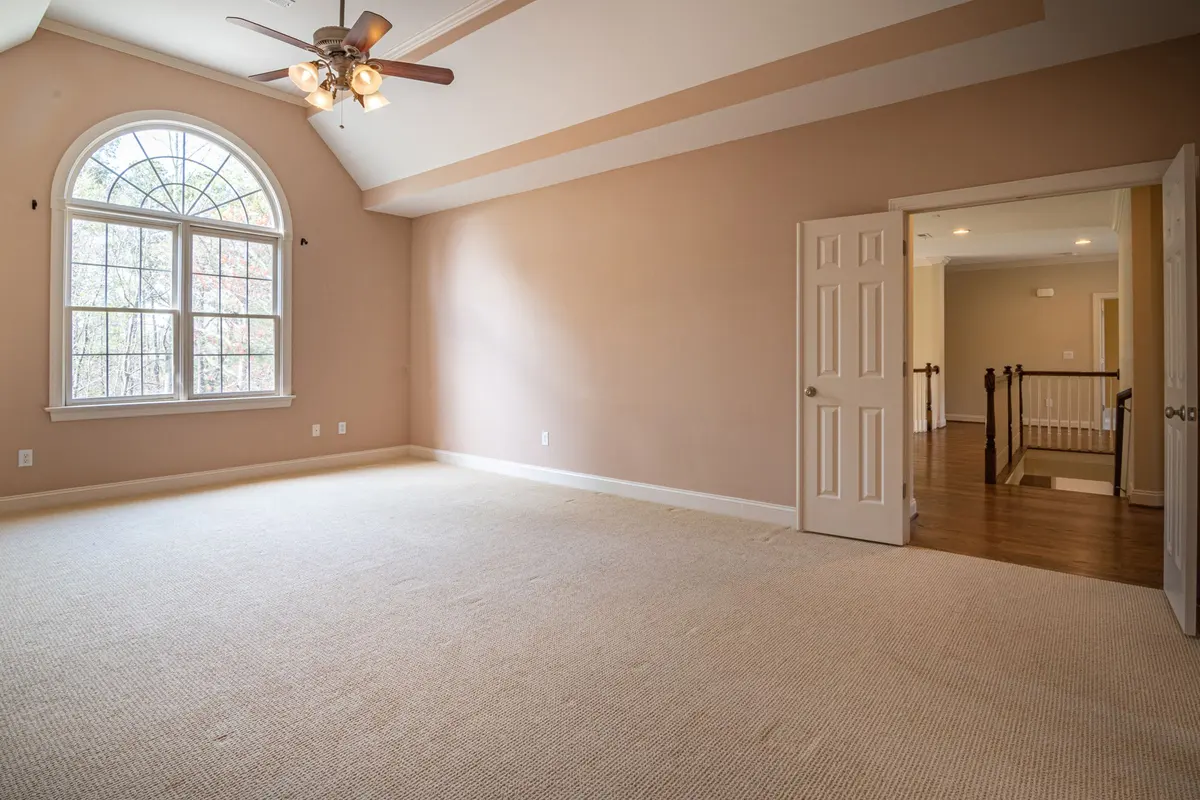
Bedrooms are carpet's strongest case. Traffic is low, water is not a factor, the room is used barefoot, and carpet is warmer underfoot on a January morning than any hard surface in an unheated upstairs.
Carpet is also the quietest floor there is, which matters more than people expect in a two-story house. Footsteps overhead on a hard surface carry through a ceiling. If the room above is a bedroom or a home office, that is worth weighing.
And where a room is genuinely cold — a bonus room over a garage is the classic example — carpet with a decent pad does more for how the room feels than the R-value on paper suggests.
Where LVP is the easier answer
Kitchens, bathrooms, entries, laundry rooms and basements. Anywhere that sees water, grit or wheels.
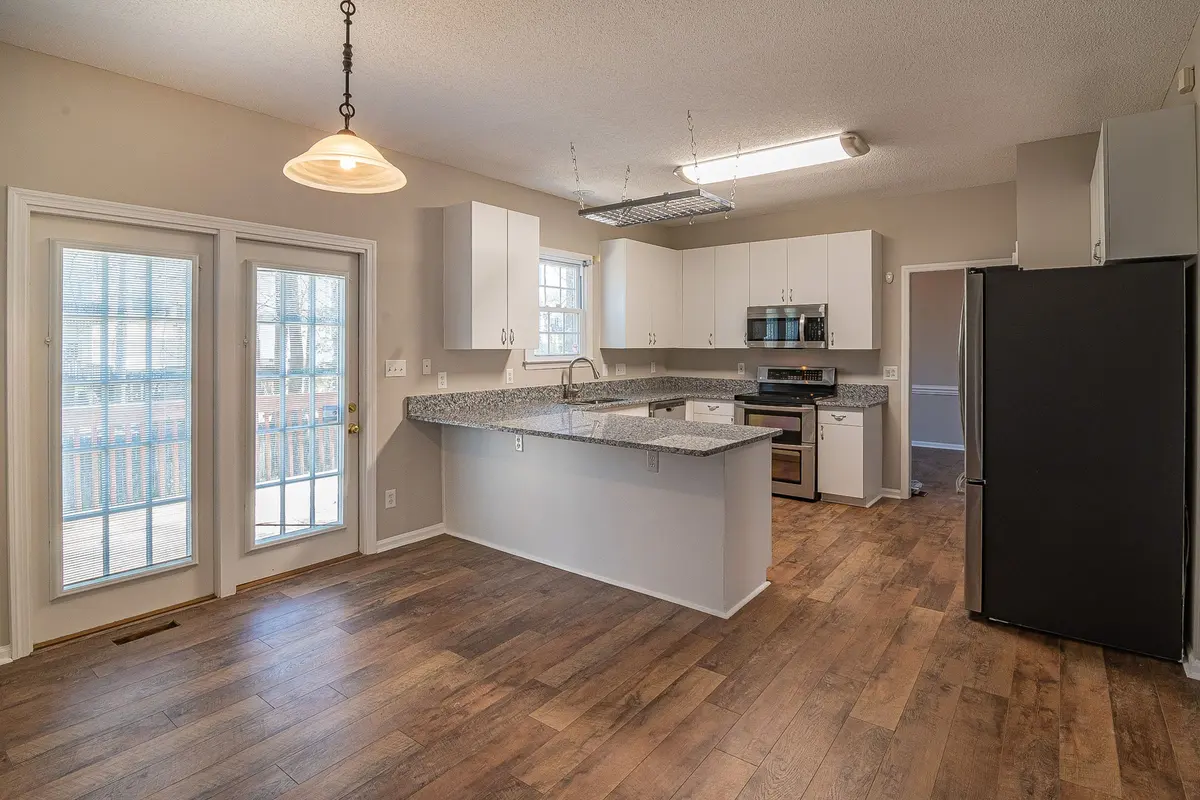
LVP also solves a problem particular to open-plan houses. When the kitchen, dining and living areas are one space, running a single floor through the whole of it makes the room read as one room. Changing material at an invisible boundary chops it up.
The specification matters more than the category
This is the part that gets skipped, and it is the part that decides whether you are happy in year eight.
With carpet, the number that matters is density — how tightly the fiber is packed — not how soft the sample feels in your hand. A plush, soft sample with low density will mat down in a traffic lane within a couple of years. A denser, slightly firmer carpet will look the same at year five as it did at year one. Ask about the twist and the face weight, not just the color.
With LVP, the number that matters is the wear layer, measured in mils. That is the clear layer on top that takes the scratching. A 6 mil wear layer and a 20 mil wear layer can look identical in the showroom and behave completely differently under a dog's claws. The core matters too: a rigid core handles an uneven subfloor and temperature swing better than a flexible one.
In both cases the difference between a cheap specification and a good one is a smaller number than most people expect, and it is the single best place to spend money on a flooring job.
What the Willamette Valley adds to the decision
We install in a wet climate. Newberg averages just under forty inches of rain a year, and most of it arrives between October and May.
What that means practically is that entries, mud rooms and the first few feet inside any exterior door take a beating from water and grit for eight months of the year. It is the strongest single argument for a hard surface at every entrance to the house, whatever you do elsewhere.
It also means houses here swing between damp and dry seasons, and floors move with that. Any floating floor needs an expansion gap at the walls, hidden under the trim, so the floor can move without buckling. A floor installed tight to the wall in February will find that out in August.
The transition is part of the design
If you are running carpet in the bedrooms and LVP everywhere else, the transitions are worth thinking about before the order is placed, not on install day.
The best place for a change of material is a doorway, where a closed door would sit. The worst place is the middle of an open sightline, where the eye reads it as a mistake. Where a hallway opens into a room with no door, it is usually better to carry the hard surface into the room than to stop it at an invisible line.
How we handle it
We measure in person, because a number produced over the phone is a guess, and because seeing the rooms is how these questions get answered properly. We would rather talk you into the right specification than the expensive one — a denser carpet in the bedrooms and a thicker wear layer in the kitchen will serve you better than an upgrade you cannot see.
Norman's Floor Covering has been working on Willamette Valley houses since 1978, and we are licensed with the Oregon Construction Contractors Board under CCB 103259. Our installation work carries a ten year labor warranty. How the Oregon climate shapes the whole-house decision is in the best flooring for Oregon homes.
If you want a straight answer about your own rooms, the showroom is at 900 Industrial Parkway in Newberg, Monday to Friday, and estimates are free.
Related services: carpet installation and luxury vinyl plank flooring.