
When people pick tile, they spend an hour on the tile and about thirty seconds on the grout. Then they live with the grout every day. It shapes how the floor looks from across the room, it decides how much cleaning the floor needs, and in a wet room it matters to how well the floor stands up to water.
Here is what to think about before you choose.
Color: blend in or stand out
Grout color does more to change the look of a tile floor than most people expect. There are three basic approaches.
Matching. Grout close to the tile color makes the floor read as one calm surface. The tile pattern fades and the room feels larger. This is the safest choice for most entries, laundry rooms and bathroom floors, and it's the most forgiving when a tile has a slight lip or a joint isn't perfectly even.
Slightly darker. One or two shades darker than the tile hides everyday dirt in the joints while keeping the look soft. For a floor that sees muddy boots, this is often the most practical choice.
Contrasting. White tile with charcoal grout, or dark tile with light grout, outlines every tile. It suits patterned layouts and some vintage looks, but it shows every imperfection in the layout and every uneven joint. Make sure you love the grid before you choose it.
A few practical points:
- Very light grout on a floor shows dirt quickly, especially in entries and kitchens.
- Very dark grout can show the white haze of hard water and soap residue.
- Grout dries lighter or darker than it looks wet. Look at a cured sample, not a wet one, and look at it on the floor in the room's own light.
Joint width is not only a style choice
Everyone wants thin grout lines, and with the right tile they're possible. But joint width is set by the tile, not just by taste.
Tiles are never perfectly identical. Some are slightly different sizes or have slightly curved faces. The grout joint absorbs those differences. Rectified tiles, which are cut to precise dimensions after firing, can take narrower joints. Non-rectified tiles need wider joints to hide variation in size. Large format tiles often have a slight bow in the middle, and the joint and the layout have to account for it.
The tile manufacturer sets a minimum joint width for each product. Going narrower than that to get a sleeker look can lead to uneven lines and chipped edges. We follow the manufacturer's numbers and help you choose a tile that gives you the look you want within them.
The three main types of grout
Cement grout
The traditional choice, mixed from powder with water.
- Sanded grout has fine sand in it for strength and is used for wider joints.
- Unsanded grout is smoother and is used for very narrow joints and some delicate tile surfaces.
Cement grout is porous. It needs sealing to resist stains, and it needs resealing from time to time. It's economical and very widely used.
Epoxy grout
Epoxy grout is made from resin and hardener. It's very dense, highly stain resistant and doesn't need sealing. It's a strong choice for kitchens, mudrooms and anywhere spills and dirt are constant.
The trade off is installation. Epoxy sets quickly and is harder to work with, so it takes more time and skill to install cleanly. Ask about it early so it's part of the plan.
Premixed grout
Premixed grouts come ready to use in a tub, often urethane or acrylic based. Many are stain resistant without sealing and give a very consistent color. They often have specific cure times and use instructions, and suit some rooms and tiles better than others.
Grout in wet rooms
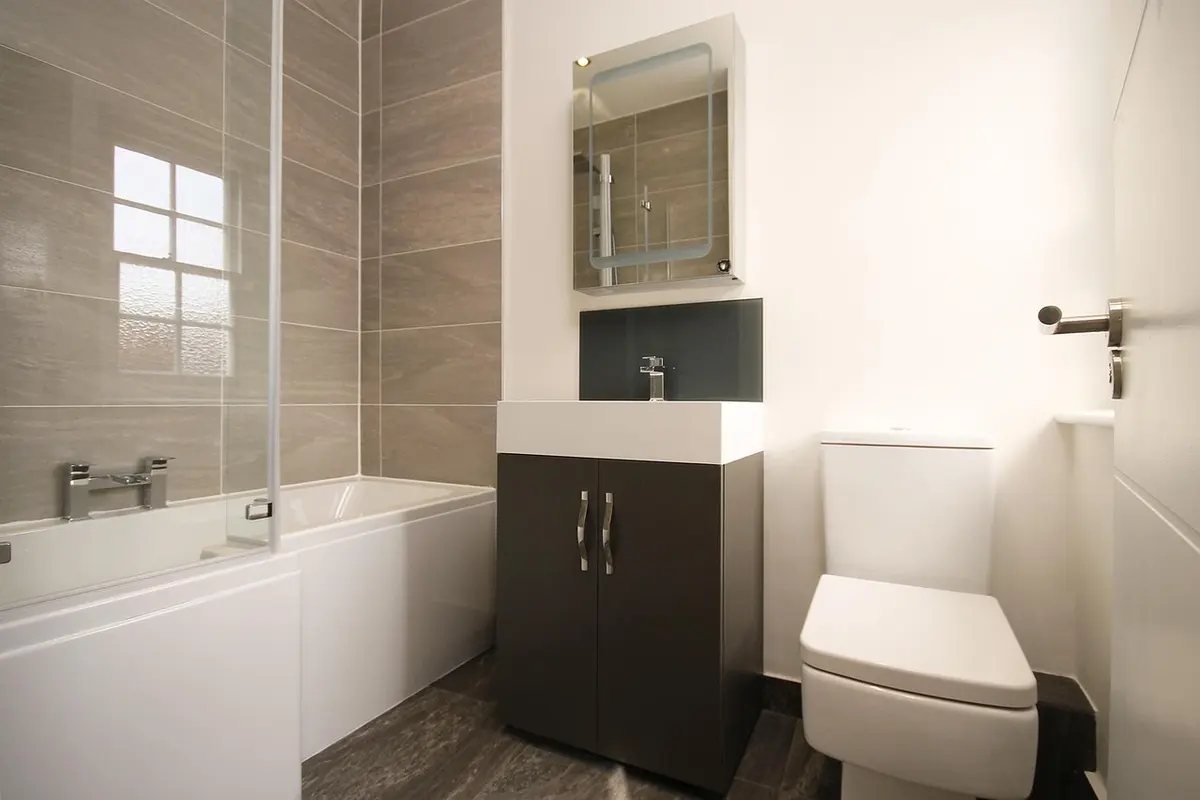
On a bathroom floor or a laundry room, grout is not the waterproofing. Water that soaks through grout reaches whatever is underneath. In a shower, the real protection is the waterproofing system behind and under the tile, which is the part we talk to you about first. What a tile shower actually involves explains that system.
On a floor, a sealed or stain resistant grout keeps the surface clean and stops spills from soaking in, and the right underlayment and setting method keep the floor sound.
Caulk, not grout, at the edges
Tile floors move slightly as the house moves and the seasons change. Where tile meets a wall, a tub or a change of plane, the joint should be filled with a flexible sealant, not grout. Grout in those joints cracks. A flexible joint at the edges is one of the small details that keeps a tile floor looking right for years.
Keeping grout clean
- Sweep or vacuum often. Grit wears grout faster than anything.
- Use a pH-neutral cleaner. Harsh acidic or bleach cleaners can damage cement grout and some sealers.
- Wipe spills promptly, especially coffee, wine and oil.
- Reseal cement grout as the sealer manufacturer recommends.
Making the choice
Bring a tile sample home, set it on the floor, and hold a few grout color samples next to it at different times of day. If the room is an entry or a laundry, lean a shade darker. If you want the tile to disappear into a calm floor, match it. If you want the pattern to show, choose the contrast deliberately.
We'll go through tile and grout together at your estimate, along with joint width for the tile you choose and which grout suits the room.
Norman's has been installing floors from Newberg since 1978, across Yamhill County and Portland's Westside. The showroom at 900 Industrial Parkway is open Monday to Friday, 9am to 5pm. Call (503) 538-8242 or book a free in-home estimate, and we will bring samples to your room.
Related services: tile and floor removal and demo.