Most people who plan to stay in their house for the long run think about grab bars and a walk-in shower. The floor comes up later, usually after a stumble on a doorway or a slip on a bathroom floor that has been there for twenty years without anyone noticing it was a problem.
It deserves to come up sooner. Falls are the leading cause of injury among older adults in the United States, according to the CDC, and a large share of them happen at home, on floors people walk every day. What makes a floor safer is not expensive or clinical. It is mostly a matter of removing the small edges, bumps and changes of surface that a younger pair of feet steps over without thinking.
This is how we think about it when a customer tells us they are planning to stay put.
Start with the transitions
The most common trip hazard in a house is not a material. It is the point where one floor meets another.
Older houses tend to have a different floor in every room, each laid at a different time, at a different height. Where carpet meets sheet vinyl, or tile meets a wood-look plank, there is often a lip, a metal strip or a reducer standing proud of both floors. Each one is small, and each one is a place where a toe catches or a walker wheel stops dead.
The ADA standard for accessible design is a useful yardstick even in a private home. It allows a change in level of up to a quarter of an inch with a vertical edge, and up to half an inch if the edge is bevelled. Anything more should be ramped. Few houses were built to that, and many have transitions well over it.
The fixes, roughly in order of how much they solve:
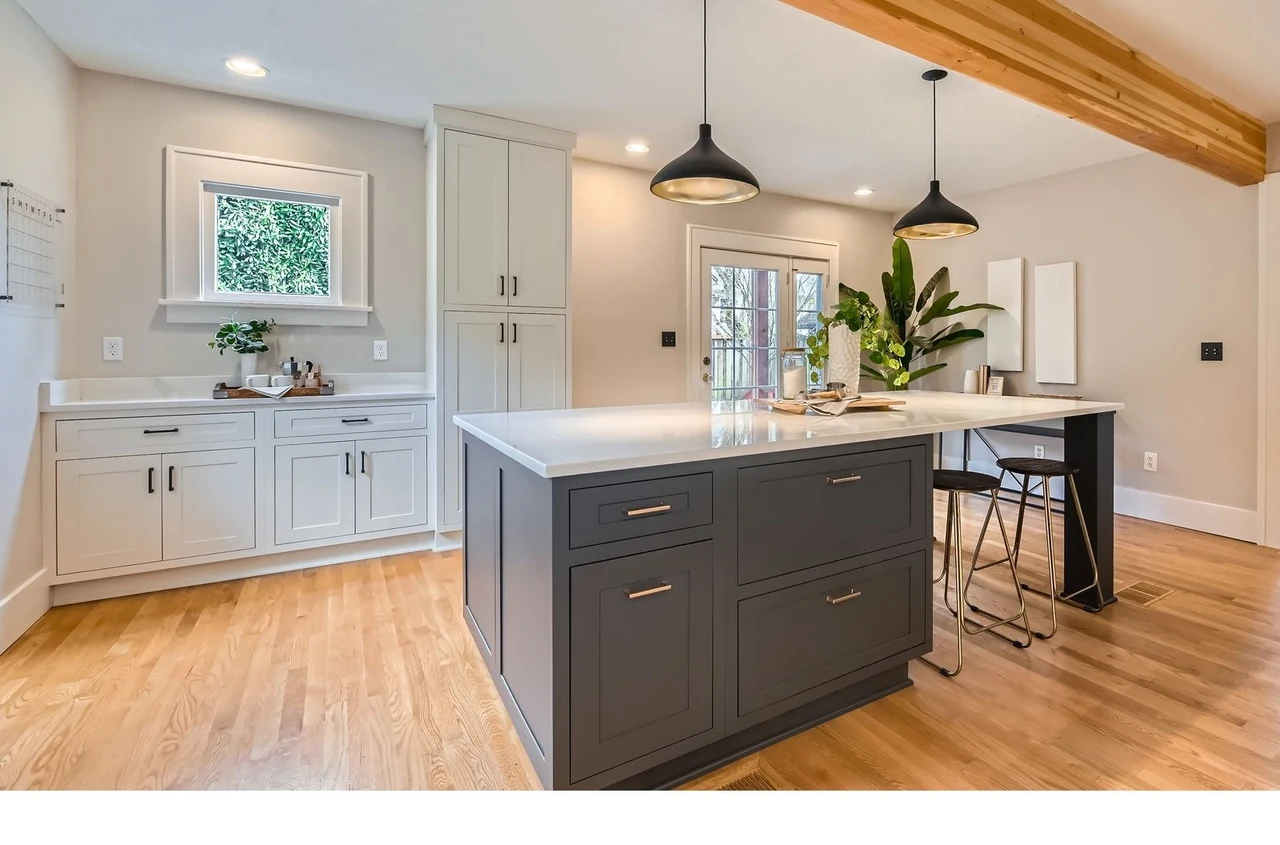
- Run one floor through. The best transition is none. Carrying one hard surface through the hallway, kitchen and living areas removes every doorway lip in between. It is the single biggest improvement most houses can make, and it is also the reason we usually recommend replacing connected areas together rather than one room at a time. There is more on that in matching flooring through the house.
- Bring the heights together. Where two floors do have to meet, the subfloor can often be built up or taken down so they arrive at nearly the same level, and a low, bevelled transition covers the joint.
- Choose the carpet to suit the hard floor. A thick carpet on a thick pad sits well above an adjoining plank floor. A lower carpet on a firmer pad closes the gap.
Choose a firm surface
Soft is comfortable to stand on. It is not always easy to walk on, and it is harder still to roll across.
Carpet. Carpet is kind to a fall, warm underfoot and quiet, and it is not the wrong choice for an older household. But the right carpet is different. The ADA guidance calls for carpet with a pile no more than half an inch high, a firm pad or none, and edges fastened down. In a house that means a lower, denser carpet on a firm pad rather than a deep, plush one on the thickest pad on the shelf. Deep pile drags at feet that do not lift as high as they used to, and a soft pad makes a walker or wheelchair feel like it is going through sand. Our guide to choosing carpet that lasts covers density and pad in more detail, and the same things that make carpet wear well also make it easier to walk on.
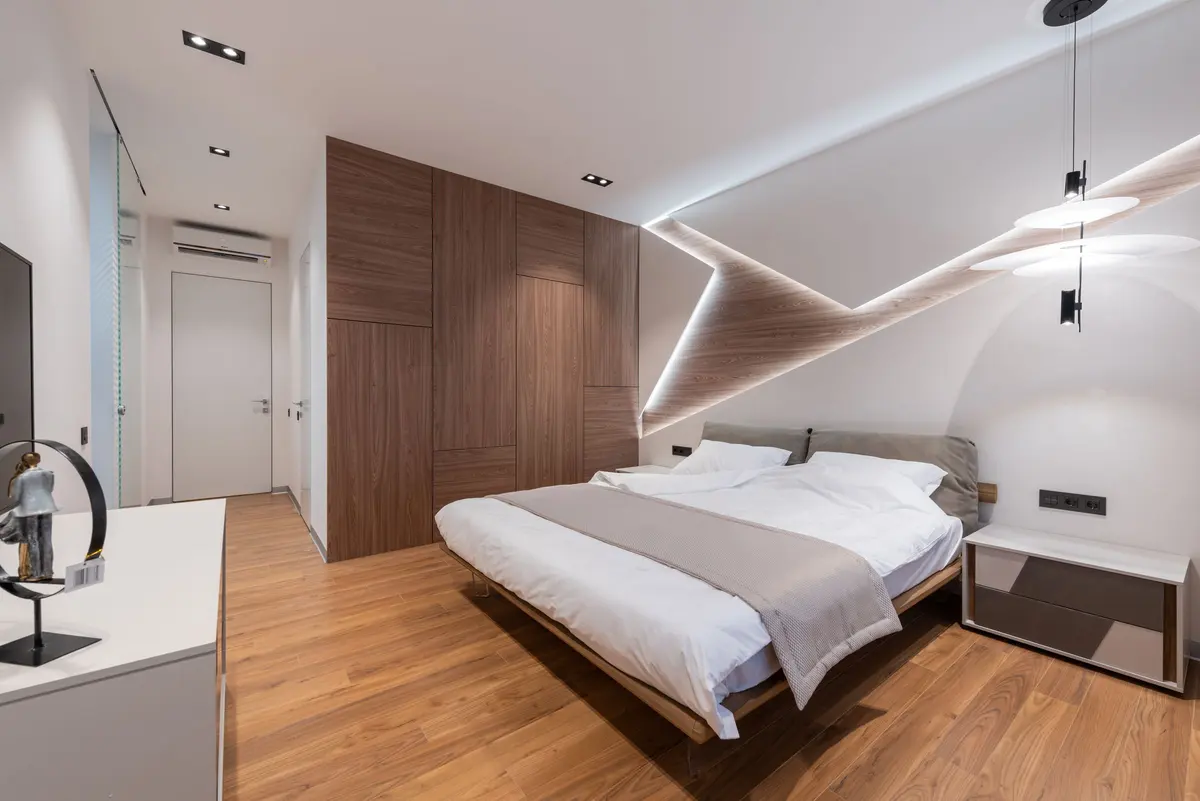
Luxury vinyl plank. LVP is firm, level, easy on the feet compared with tile, and not slippery when dry. A textured or embossed finish grips better than a high-gloss one. It is also water resistant, so a spill in the kitchen or a splash at the bathroom sink is not a crisis. For many older households it is the default choice for the main living areas.
Laminate. Firm and level like LVP, with a harder surface that stands up to walker feet and wheelchair wheels. It is better kept out of bathrooms and laundry rooms. The reasons are in laminate vs luxury vinyl plank.
Tile. Tile is the least forgiving surface to fall on and the most unforgiving if it is the wrong tile. The right one is still often the best answer in a bathroom. More on that below.
The bathroom floor
Bathrooms are where the floor gets wet, and where a slip is most likely.
Tile for wet floors is rated for slip resistance. The American tile standard, ANSI A137.1, calls for a wet dynamic coefficient of friction (DCOF) of at least 0.42 for level interior floors that are expected to be walked on when wet. Ask for the number. A polished, glossy tile that looks beautiful in a showroom can fall short of it.
Size matters too. Small tiles mean more grout lines per square foot, and grout gives a bare foot something to grip. That is one reason small mosaics are the usual choice on a shower floor.
If a curbless or low-threshold shower is part of the plan, the floor and the shower have to be designed together, because without a curb to hold the water back, the shower floor has to fall to the drain from level with the bathroom floor, which often means lowering the subfloor. That is a tile shower project rather than a flooring project, and what a tile shower actually involves walks through it.
Stairs
Stairs are where a fall does the most damage, and the tread surface is part of what prevents one.
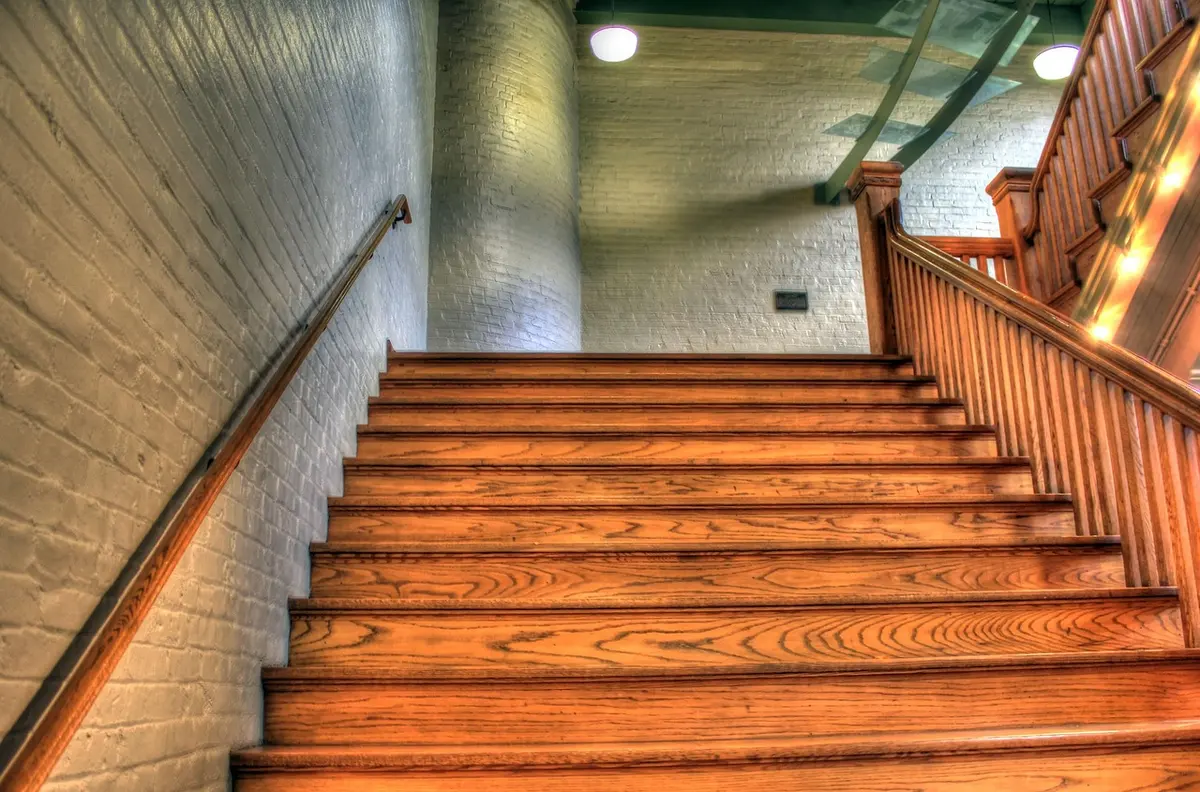
On stairs, the principles are the same as the rest of the house, only more so: firm, secure, with a clear edge to each tread. Carpet on stairs should be a low, dense product, stretched tight and fastened well at the nose of each step, because loose stair carpet is a serious hazard. Hard-surface stairs need a stair nose that is securely fixed and, ideally, visible, so the edge of each step can be seen in poor light. Stair flooring: carpet or hard surface goes through the choices in detail.
The things that are not flooring
A new floor will not do the job alone.
- Throw rugs. A loose rug on a hard floor is one of the most common trip hazards in a house. If a rug has to stay, it wants a non-slip backing or pad and low, flat edges.
- Light. A floor is only safe if it can be seen. A floor that is close in color to the one next to it can hide a step or a change of level, which is one reason contrast at stair edges helps.
- Clutter and cords. Nothing on the walking routes, particularly the route from the bedroom to the bathroom at night.
Do it before it is urgent
The best time to change the floors is while nobody in the house actually needs them changed. A flooring project means furniture moved, rooms out of use for a day or two, and some noise and dust. That is an inconvenience at sixty-five and a genuine difficulty after a hip replacement.
It also lets you do it once. If the kitchen or bathroom is going to be remodeled in the next few years, the floor should be planned alongside it, not laid now and torn up later.
How we can help
When you book an estimate, tell us the floors are being changed with the long run in mind. We will look at every transition along the routes that matter, measure the height differences, and tell you where the subfloor needs building up to bring things level. We will bring samples of lower, firmer carpets and textured plank to the house, so you can walk on them in your own rooms, with your own shoes, and with a walker or cane if one is part of the picture.
Norman's has been flooring houses around Newberg and Portland's Westside since 1978. The showroom is at 900 Industrial Parkway, open Monday to Friday, 9am to 5pm, and every install carries a ten year labor warranty. Book a free estimate and we will come to you.
Related services: luxury vinyl plank flooring, carpet installation, tile installation and stairs and trim.