Most of the wear a floor takes in the Willamette Valley does not happen in one bad afternoon. It happens slowly between October and April, one wet boot and one gritty paw at a time.
Winter on the Westside works on a floor in three ways at once: water coming in at every door, grit carried in with it, and months of heated air inside the house. None of that calls for a new floor. It calls for a few habits, and the time to start them is before the rain properly sets in.
Stop it at the door
The cheapest floor protection there is, and the most effective, is a proper mat at every exterior door: one outside and one inside.
Outside: a coarse, scraping mat that takes the mud and gravel off shoes.
Inside: an absorbent mat long enough for two or three steps, so the water stays on the mat instead of on the first few feet of floor. A mat the size of one boot catches almost nothing.
Check the backing. Some rubber and latex backings react with vinyl flooring and leave a permanent stain under the mat. On vinyl plank, use a mat or rug pad that is clearly labeled as safe for vinyl, or one your flooring manufacturer approves.
Shake mats out and let them dry. A mat that stays soaked all winter holds water against the floor it is supposed to protect.
Grit does more damage than water
Water gets the attention, but grit does more of the harm. Fine sand and gravel under a shoe act like sandpaper on a wear layer, and they dull a floor long before anything scratches it deeply.
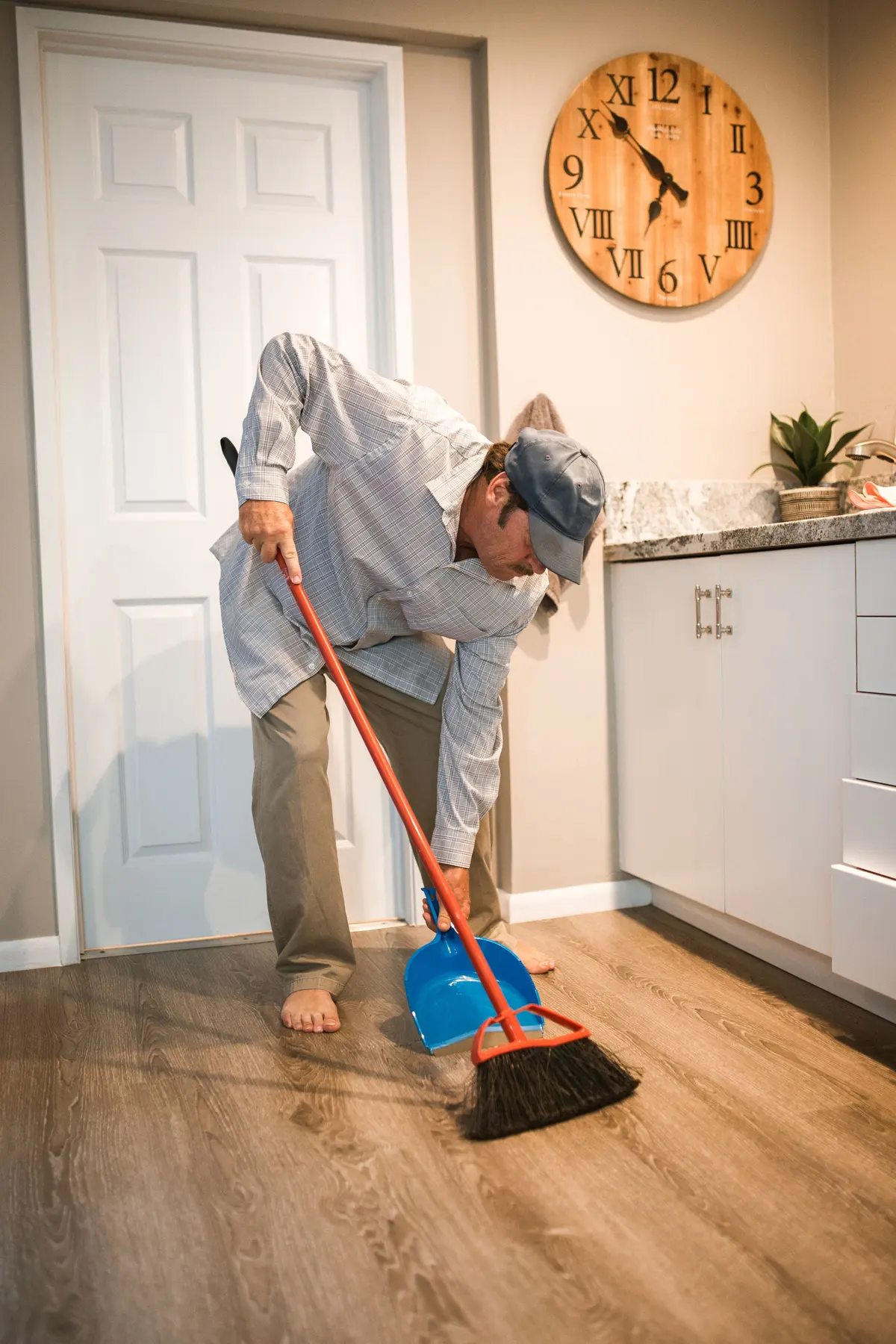
- Sweep or vacuum the entries often, more often in winter than the rest of the house. On hard floors, use a vacuum with the beater bar switched off.
- Put felt pads on chair and table legs, and replace them once they pick up grit. A gritty felt pad is worse than none.
- Lift furniture rather than dragging it across a hard floor.
Luxury vinyl plank
LVP is the most forgiving floor in a wet winter, which is why so many Westside houses have it at the doors. It still needs some care.
- Damp mop, do not flood. The plank is waterproof, but the seams and edges of a floating floor are not a sealed barrier, and water that runs to them can reach the subfloor.
- Use a cleaner the manufacturer approves. A pH-neutral hard-floor cleaner is the usual recommendation. Oil soaps, waxes and shine products can leave a film that dulls the floor and holds dirt.
- Check before you steam. Many vinyl plank manufacturers advise against steam mops. Read your product's care guide first.
- Wipe up puddles by the door the same day, and do not leave wet boots standing on the floor overnight.
The wear layer is what takes all of this, and it is why we steer houses with dogs and a busy back door toward a thicker one. What moves the cost of LVP explains the specification.
Laminate
Modern laminate handles a spill that is wiped up. What it does not handle is water left sitting at a seam, because the core is compressed wood fiber and it swells permanently once water reaches it.
- Dry mop, or a barely damp mop. Wring it out until it is almost dry.
- Deal with water right away, whether it is a wet dog, a dripping umbrella or rain running off a coat.
- Give it a bigger mat anywhere laminate runs up to an exterior door. That is the cheapest insurance in the house. Laminate vs luxury vinyl plank explains where each belongs.
Carpet
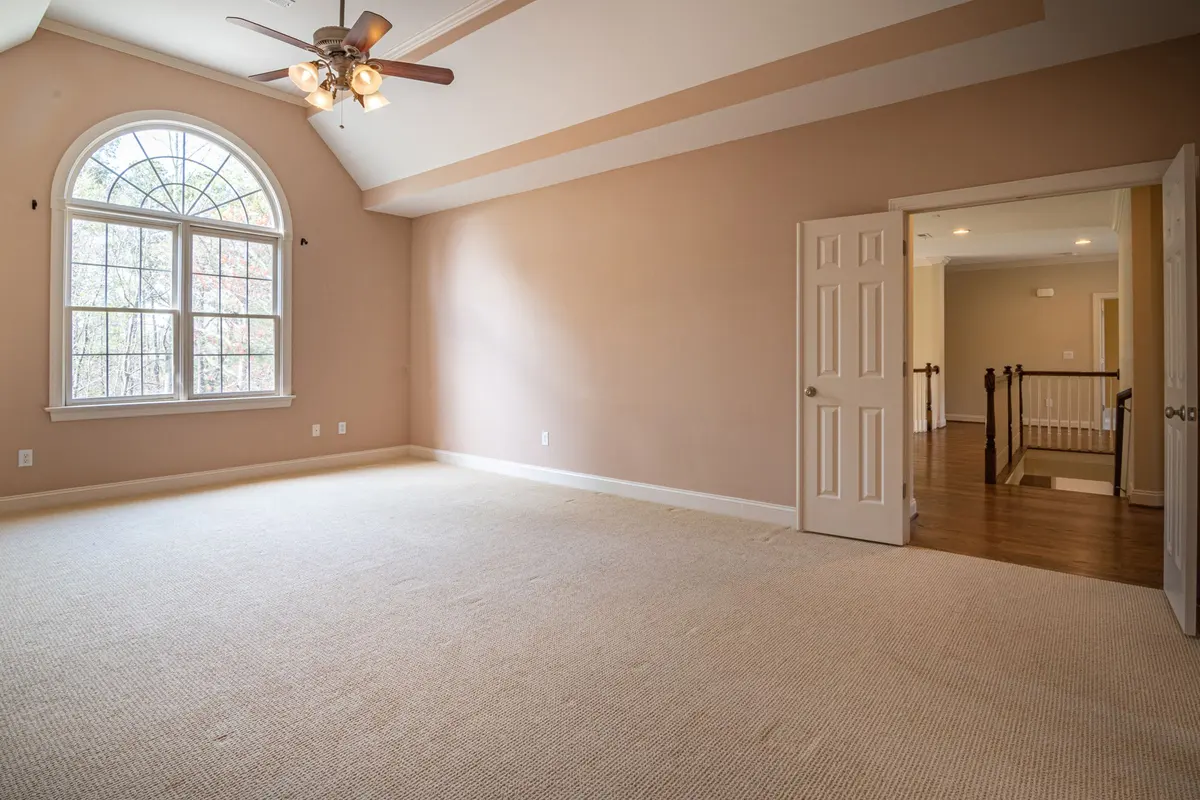
Carpet near a door has the hardest winter of anything in the house, because it holds grit down in the pile where you cannot see it.
- Vacuum the traffic lanes more often in winter. Grit at the base of the pile cuts the fibers every time someone walks over it, which is what makes a hallway look flattened and gray.
- Blot spills, never rub. Rubbing untwists the fiber and spreads the stain.
- Do not over-wet it. In a damp Oregon winter, carpet soaked during cleaning dries slowly, and a pad that stays wet can start to smell. If you rent a machine, use less water and more passes, and keep the heat and a fan running afterward.
- Read your carpet warranty. Many carpet warranties set out cleaning requirements and expect you to keep proof. It is worth knowing what yours says before you need it.
More on what makes carpet last in choosing carpet that lasts.
Tile and grout
Tile does not care about winter. Grout does.
- Sweep before you mop, or the mop just pushes a gritty slurry into the grout lines.
- Reseal cement grout when water stops beading on it. Sealing resists staining; it does not make grout waterproof.
- Mop up ice-melt residue tracked in from outside steps on the coldest days, rather than letting it dry into a film.
If you are thinking about tile for an entry or mudroom, we have written up what a tile floor needs beneath it.
Seasonal movement
Every floor responds to the humidity swing between an Oregon winter and an Oregon summer, and heating the house changes the air inside as well.
- Floating floors need their expansion gap at the walls. A floating floor that has been pinned down, by a heavy cabinet installed on top of it or trim nailed through it, cannot move, and that is when seams open or boards lift.
- Manufacturers publish a humidity range for their products in the installation and warranty documents. Keeping the house reasonably steady through the year, rather than letting it swing hard between seasons, is kind to every floor in it.
Our guide to the best flooring for Oregon homes goes further into how the seasonal swing affects each material.
What is worth a call
Some things are normal winter wear. Some are a sign of something else.
- Soft or spongy spots near a toilet, a dishwasher or an exterior door can mean water has reached the subfloor.
- Seams that open or peak on a floating floor, and stay that way, usually point to an expansion or moisture problem.
- Swollen, raised edges on laminate near a door mean water has reached the core. That does not recover on its own.
- Ripples in carpet usually mean it needs re-stretching, which we do.
- A smell that comes back when the heating goes on, in a carpeted room, usually lives in the pad or subfloor rather than the carpet. Our pet-friendly flooring guide explains why.
If we installed your floor, call us. Every install carries a ten year labor warranty, and we would much rather look at something early than late. Norman's has been flooring houses on Portland's Westside from Newberg since 1978. And if a floor has had its last winter, book a free estimate and we will bring samples to the house.