Most flooring advice is written for the whole country, and the whole country does not live here. Newberg averages just under forty inches of rain a year, nearly all of it between October and May, followed by a summer that is dry enough to shrink a door. A floor in an Oregon house is asked to cope with wet boots and grit for most of the year and then with a wide swing in humidity, and some materials handle that far better than others.
This is the guide we wish more of our clients had read before they bought the floor we ended up replacing. It is about the climate first, then the house, then the material.
What the Willamette Valley does to a floor
Two things, and they pull in different directions.
The first is water at the doors. For eight months of the year, every exterior door is a place where wet shoes, wet dogs and wet grit come into the house. The first few feet inside the front door, the back door, the garage door and the mudroom take more punishment than any other floor in the building. Carpet there is a maintenance problem you will live with for years; a wood-core laminate there swells at the seams.
The second is seasonal movement. Between a damp February and a dry August, the humidity inside a Willamette Valley house swings enough to make any floor expand and contract. Floating floors need a real expansion gap at every wall, hidden under the trim, or they peak and buckle in summer. Solid hardwood gaps in August and closes up again in winter, which is normal and which surprises people. Materials that are stable across that swing are simply easier to live with here.
The rooms, ranked by how hard the climate hits them
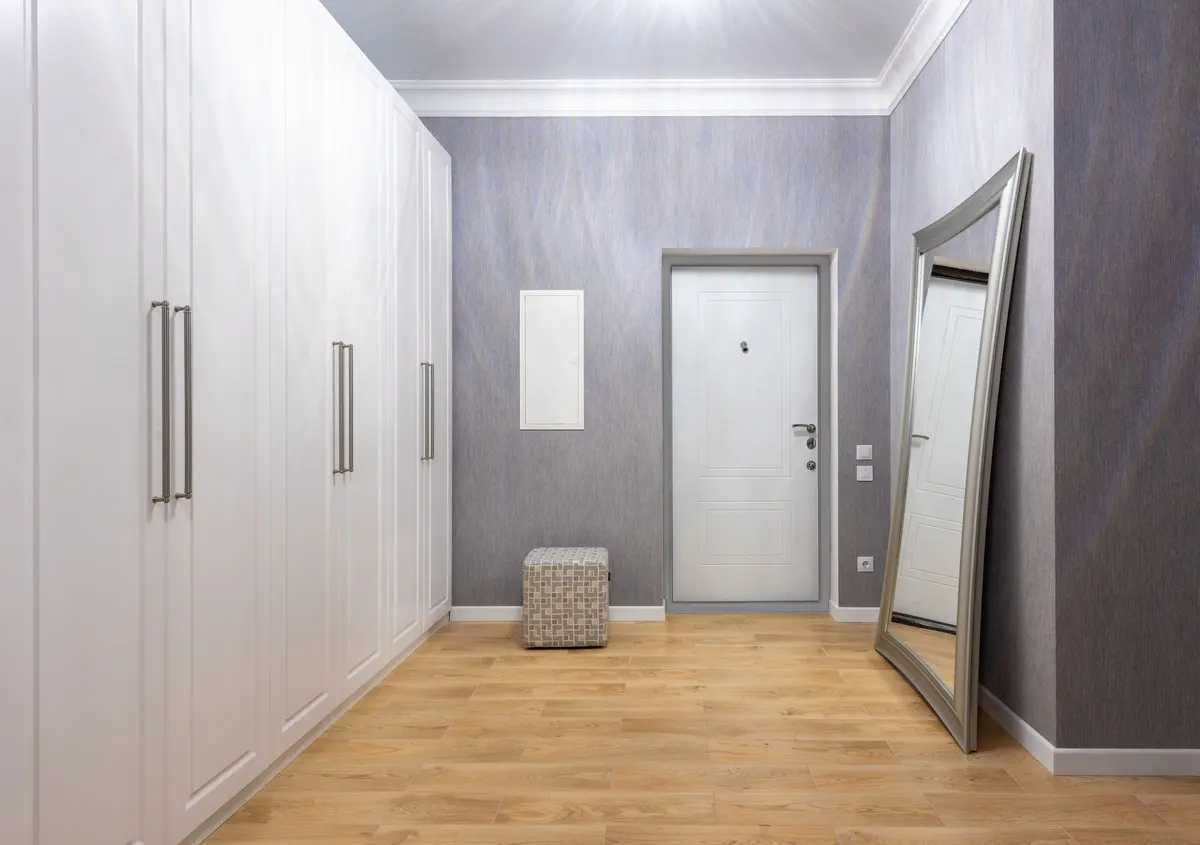
Entries, mudrooms and the door from the garage. The hardest rooms in the house. A hard surface that is waterproof through its whole thickness is the only sensible answer, and that means luxury vinyl plank or tile. This is not the place for carpet, wood-core laminate or hardwood, whatever the rest of the house is doing.
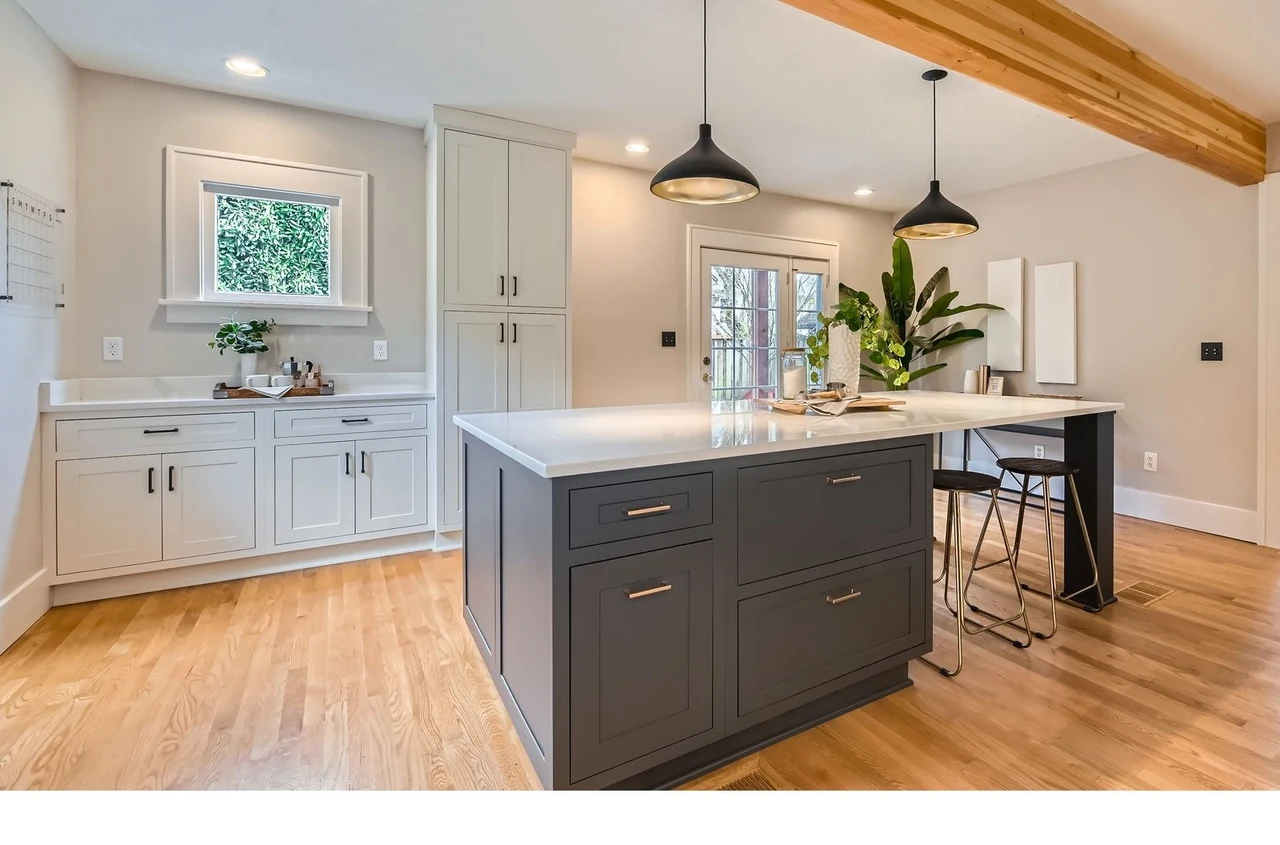
Kitchens, bathrooms and laundries. Water again, but from inside: dishwashers, fridge lines, sinks, washing machines. Luxury vinyl plank or tile. A waterproof laminate such as Mohawk's RevWood is a genuine option in a kitchen, and we would still rather see LVP or tile in a bathroom or laundry, where a leak can run for a week behind a cabinet.
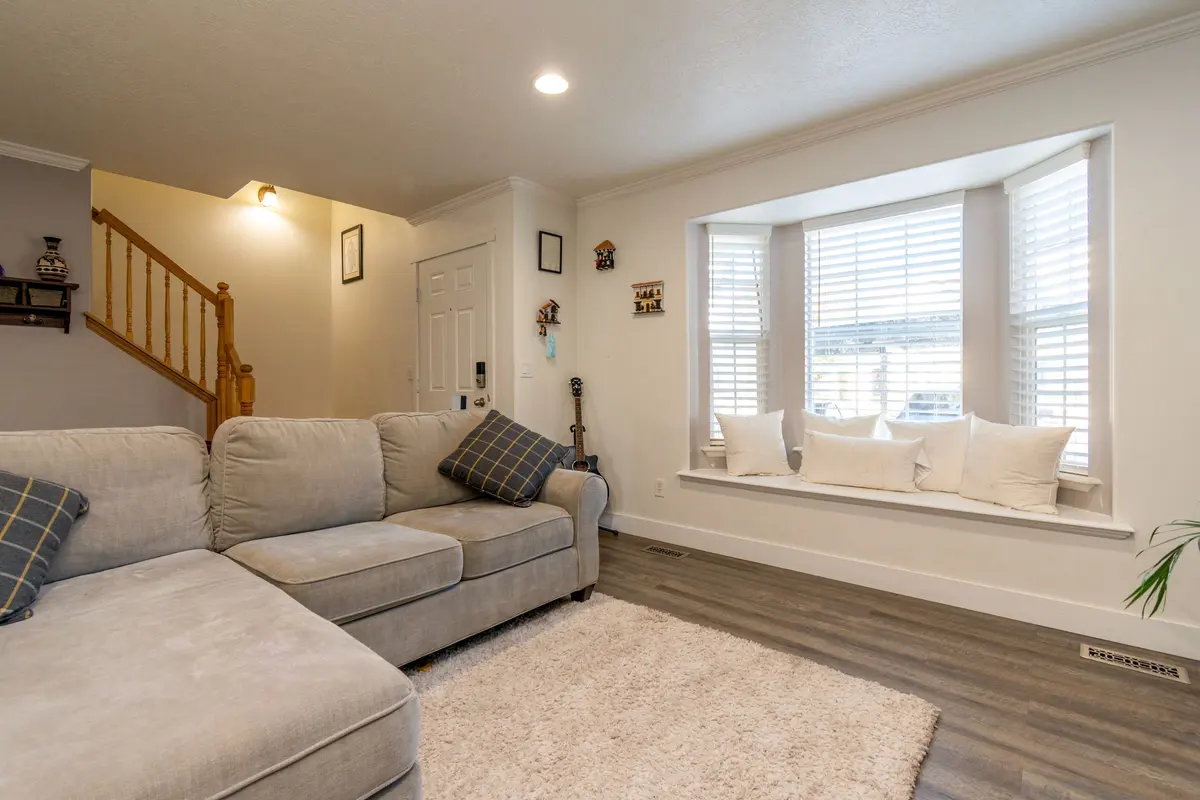
Living rooms, dining rooms and hallways. Traffic more than water. Laminate is at its best here, with a harder wear surface than vinyl and usually a better look for the money. LVP is the other choice, and the right one if the room opens off an entry or runs into the kitchen without a doorway to change material at.
Bedrooms. Carpet, in most houses. Low traffic, no water, walked on barefoot, and warmer on a January morning than any hard surface in an unheated upstairs. Where allergies or an elderly dog argue for a hard surface, LVP with a rug does the job.
Stairs. Carpet for quiet and grip, or a hard surface with proper stair nosings. In hillside towns like West Linn and Lake Oswego, stairs come up on most jobs and are worth quoting as their own line. See our stairs and trim page.
We went room by room in more detail in the best flooring for every room in the house.
Where the age of the house changes the answer
Oregon houses fall into rough groups, and each has a floor problem of its own.
Pre-1950s houses near downtown Newberg, McMinnville and the older streets of Sherwood usually have a timber subfloor over a crawlspace, and the subfloor has settled. It is rarely flat. A floating floor bridges the dips and drums against the void, so the preparation matters more than the product, and it belongs in the quote. Solid hardwood was original in many of these houses, and where it is sound it is worth keeping.
1960s to 1980s ranches and split-levels across Tigard, Tualatin, Beaverton and King City often have particleboard underlayment over the subfloor. Particleboard swells and crumbles when it has ever been wet, and it very often has been, under an old sheet vinyl in a kitchen or bathroom. It cannot be built over. We wrote about this in what we find under your old floor, because it is the most common surprise on a job.
Post-1990 subdivisions on the edges of Newberg, Sherwood, Wilsonville and Woodburn are the easiest houses to floor. Flat subfloors, predictable framing, and usually a builder-grade carpet and vinyl that has reached the end of its life at the same time. These are the houses where a whole-floor LVP through the main level and carpet in the bedrooms goes in cleanly.
Slab-on-grade and basement rooms are less common here than in colder states, but where a room sits on concrete, the slab gives up moisture and any floating floor over it needs a tested slab and a vapor barrier. Skipping that is how a floor cups a year later.
The materials, honestly
Luxury vinyl plank. The workhorse for the wet rooms and the main floor. Waterproof through its thickness, tolerant of dogs and dragged furniture, and stable across the seasonal swing if it is a rigid-core product with a real expansion gap. The wear layer, measured in mils, is the specification that decides how it lasts, and it is where the money should go.
Laminate. Better than its reputation and better than LVP in the rooms it suits. A harder wear surface, deeper embossing, and a more convincing wood look at a given price. It belongs in living rooms, bedrooms and hallways. A waterproof construction extends it into the kitchen; it still does not belong at an exterior door.
Carpet. The right answer for bedrooms and most stairs, and the wrong answer at any door. Density decides how it wears, and a moisture-barrier pad is worth specifying in any house with pets. Our guide to choosing carpet that lasts covers how to read a sample.
Tile. Unbeatable in a shower and excellent in a bathroom or entry. Cold underfoot in an Oregon winter unless it is over radiant heat, and unforgiving of a subfloor that moves. We install it, and we are specialists in tile showers in particular.
Hardwood. Beautiful, and the least forgiving of the climate. Solid hardwood moves seasonally and does not tolerate water. Engineered hardwood is the better-behaved choice in a wet region. We carry hardwood through the showroom; it is worth an honest conversation about where in the house it will be happy.
Radiant heat and heat pumps
More Oregon houses are running heat pumps and radiant floor systems than a decade ago, and both change the picture. Radiant heat under a floor needs a material rated for it; some vinyl and laminate products are, and some are not, and the manufacturer's maximum surface temperature is a real limit. Tile and engineered hardwood are the traditional choices over radiant systems. Bring it up at the estimate, because it narrows the product list before you fall in love with a sample.
The rule that ties it together
Hard, waterproof surfaces at every door and in every wet room. Laminate or LVP through the living areas. Carpet in the bedrooms. Transitions at doorways, not in the middle of a sightline. And a real expansion gap on every floating floor, because the summer will find out if it is not there.
Norman's Floor Covering has been working on Willamette Valley houses since 1978, licensed under CCB 103259, with a ten year labor warranty on every install. We measure in person, because seeing the rooms is how these questions get answered. The showroom is at 900 Industrial Parkway in Newberg, Monday to Friday, and in-home estimates are free from McMinnville to Lake Oswego. What each of these floors costs installed is in what flooring costs in Oregon.