"How long will it take?" almost always means "how many days will my house be a building site?" — and that is the smaller of the two numbers.
There are two clocks. One starts when you sign and runs until material is in the house. The other is the install itself. People plan carefully for the second and are surprised by the first, which is why a project that takes three days on site can still take a month from the day you decided.
Clock one: before anybody arrives
The estimate. A measure takes under an hour, and we bring samples to the house so the visit does the choosing as well as the measuring.
Choosing. This is the step that varies most, and it is entirely yours. Some people decide at the estimate. Some take three weeks living with samples on the floor in different light, which is a perfectly good use of three weeks.
Ordering and delivery. Stocked products come quickly. Special orders, a specific color in a specific line, or anything from a manufacturer running long, take longer, and back-orders are real. This is the step to ask about at the estimate if you have a fixed date — a listing, a baby, a Thanksgiving.
Acclimation. Most flooring has to sit in the room it is going into, boxes open or closed as the manufacturer specifies, for a stated period before it can be laid. It is not padding. A floating floor laid without acclimating expands after installation and buckles, and that failure is not covered by anybody's warranty. Laminate and vinyl usually want a day or two. Solid wood wants longer.
Clock two: the days on site
Roughly, for an average house, once material is in:
- Carpet — the fastest floor there is. Most houses are a single day, sometimes two for a whole house with stairs.
- Luxury vinyl plank and laminate — one to three days for a main level, depending on how cut-up the rooms are. Both are floating floors and go down quickly. See luxury vinyl plank and laminate.
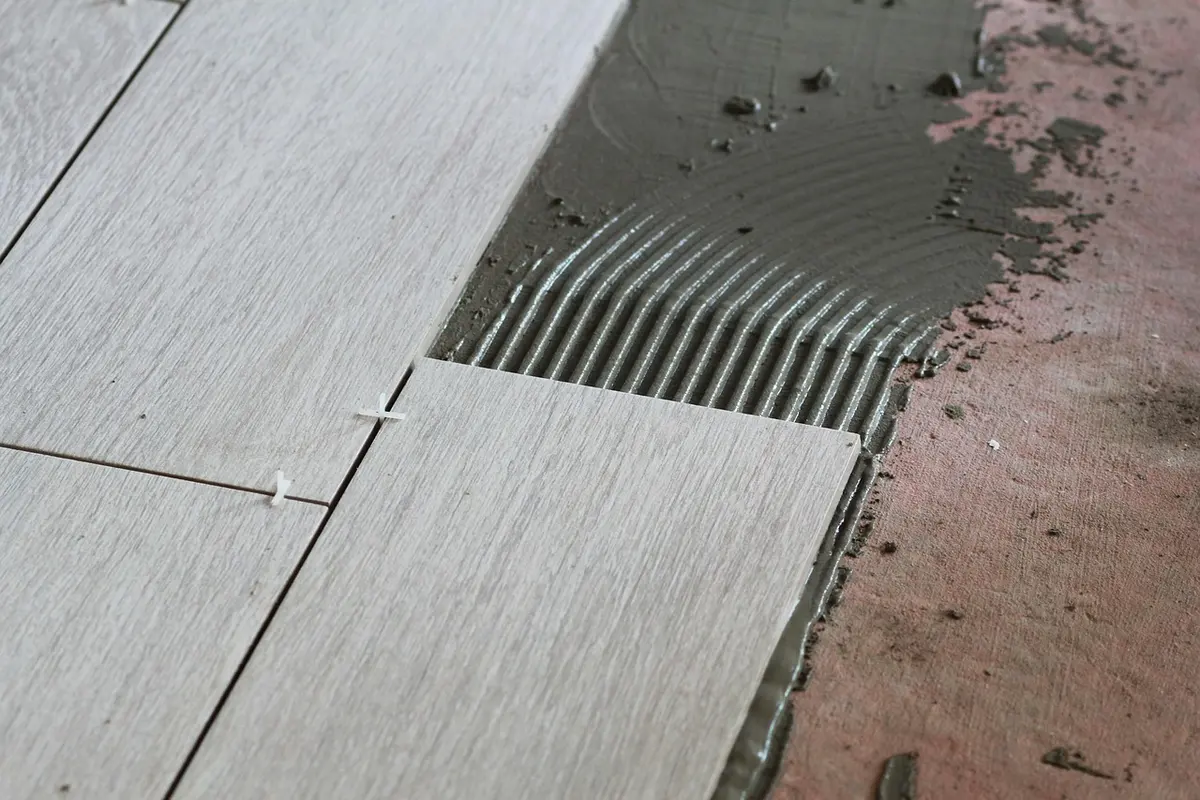
- Tile — the long one, by a distance. Three to five days for a normal room, and more for a shower. It is not the tiling that takes the time; it is that mortar and grout have to cure between stages, and curing does not care how many people are on site. See tile.
- Quartz counters — templated on one visit, fabricated off site over one to two weeks, installed on a second visit in a day. See quartz counters.
- Stairs — a flight adds a day on its own most of the time. Treads, risers and nosings are slow, skilled work. See stairs and trim.
Inside those days, a typical job runs: furniture out, old floor up, subfloor checked and prepped, new floor down, transitions and trim, cleanup.
What adds days, and why
Subfloor repair. The honest wildcard. Nobody knows what is under the old floor until the old floor is off, and a soft spot or a separated plank subfloor has to be fixed before anything goes over it. What we find under an old floor is the whole story. This is the most common reason a three-day job becomes a four-day job.
Tear-out. Pulling carpet is quick. Pulling glued-down vinyl or old tile is not, and it is dusty, noisy work. Budget a day for it on anything that was stuck down. See floor removal and demo.
Furniture and appliances. We move furniture. It still takes time, and a full house takes more of it than an empty one.
Plumbing. Tiling a bathroom means the toilet comes off and goes back, and that is a fixed piece of the schedule.
Patterns and layouts. Herringbone, a diagonal run, a tile inset — any layout with a pattern to hold adds cutting time and waste. Worth it, and worth knowing about in advance.
More than one material. Every junction between two floors is a transition that has to be measured, cut and fitted, and height differences sometimes mean trimming a door.
Can you live in the house while it happens?
Usually yes, if the job is sequenced. Flooring is one of the few trades that can be done a room at a time, so there is always somewhere to sleep and somewhere to sit. What it costs you is a day or two of total upheaval spread into three or four days of partial upheaval.
The rooms that are hardest to work around are the kitchen and the only bathroom. If either of those is getting tile, plan for it — a tiled bathroom is genuinely out of use for the curing days, not just the working ones.
Dust is the other thing worth planning for. Tear-out of tile or glued vinyl makes a lot of it, however carefully it is done, and it is worth taking the same precautions you would for any demolition. Getting your home ready for installation covers what to do before we arrive.
Why the answer at the estimate is a range
We would rather give you a range and hit it than give you a single day and miss it. Two things genuinely cannot be known before we start: what the subfloor is doing under the old floor, and whether the material ships on time. Everything else we can be firm about.
What you should get from us at the estimate is a start window, a working duration, and a clear statement of what happens if the subfloor needs work — agreed in advance rather than discovered halfway through.
If you are working to a date
Tell us the date at the estimate, not afterward. A listing, a move-in, a holiday, a new baby — every one of those changes what we recommend, because sometimes the right advice is a stocked product in a good color rather than a special order in a perfect one. Commercial jobs run on a different schedule, phased around opening hours; see commercial flooring in Newberg.
Norman's has been fitting floors from Newberg since 1978 and every install carries a ten year labor warranty. Book a free estimate, and if you have a deadline, lead with it.